Why must Piñuña Blanco be protected?
The Santa Cruz de Piñuña Blanco Indigenous Reserve, located in the department of Putumayo, is one of the partner organizations involved in implementing the ConBosque project. In southern Colombia, risks linked to the presence of armed groups persist. Invasions of Piñuña Blanco’s territory can lead to the displacement or confinement of its inhabitants, as well as the intrusion of illegal actors involved in drug trafficking or land grabbing. And yet, it is precisely because of these risks that the project is so important.
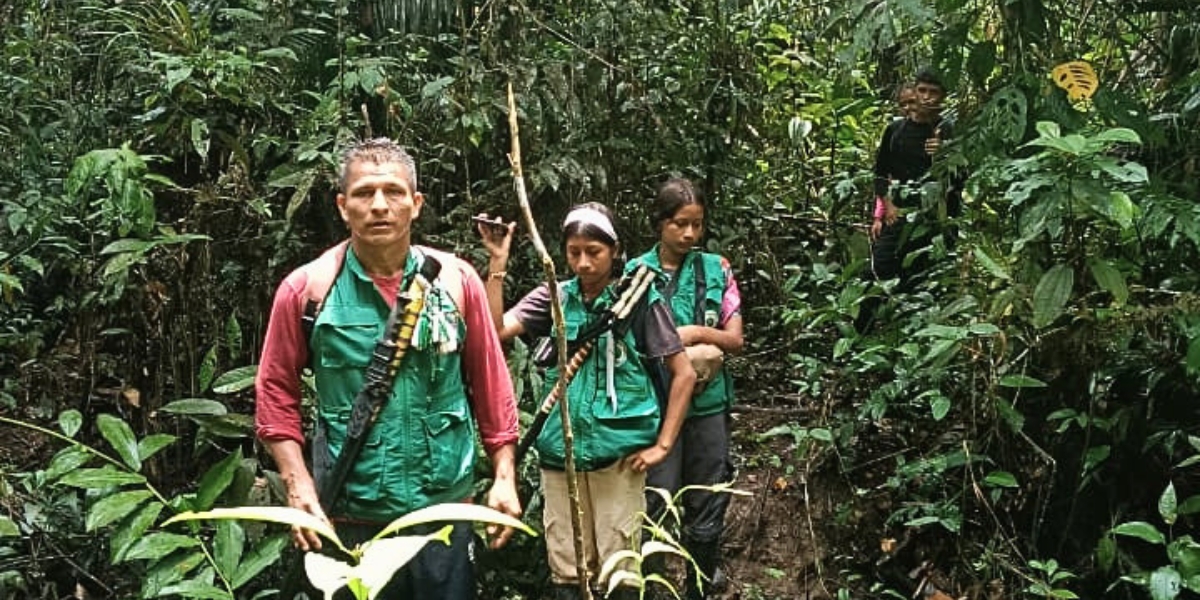
The reserve belongs to the Siona people, covers 5,400 hectares, and was legally established on September 29, 1992. It is home to 145 families. The Indigenous Guard, which is part of the reserve’s organizational structure, protects the ancestral territory against threats such as illegal armed groups and exploitative projects through peaceful resistance guided by spiritual and community principles aimed at preventing the physical and cultural extermination of the community.
It is composed of 40 people, spiritually known as “cuiracuas,” who use their traditional knowledge to peacefully maintain territorial control and defend the Amazon.
Testimony by Rigoberto Carlosama
Tell us a little about yourself and what you do
My name is Rigoberto Carlosama Ocoguaje; I am a member of the Piñuñablanco Indigenous Reserve. I am one of the Reserve’s guardians, and I am also active on a spiritual level as a disciple.
Why do you think projects like ConBosque are important?
For us, the importance of the ConBosque project lies in the fact that it allows us to deepen our knowledge of the territory every day. As guardians, we conduct patrols to spot animals, count trees, and identify everything our territory has to offer—both for our subsistence and for our coexistence with it.
Both as a ranger and as a member of the Piñuña Blanco community, our connection to our land is very important. We are the Zio Bain (an Indigenous people) ; we follow in the footsteps of our elders. They have already left us, but we are here to carry on their legacy. In this way, we learn every day about nature and the territory, but also on a spiritual level—which is the most important—and about the strength that nature gives us. The concept of “mayco” is essential: it is the foundation upon which we rely to continue strengthening these natural spaces, defending and caring for our territory, our “mayija.” Therefore, we continue to work on the political, spiritual, and community levels. This is what makes us Zio bain.
How does Envol Vert contribute?
Envol Vert supports these activities by facilitating technical exchanges. Building on the network already established by the indigenous rangers, the project strengthens the capacity of some of its members to use drones, GPS devices, camera traps, and online tools such as iNaturalist for species identification and territorial monitoring, so that they can continuously report what they encounter during their patrols. In Piñuña Blanco, young people are also being trained in techniques for monitoring deforestation; they are responsible for monitoring the forests.
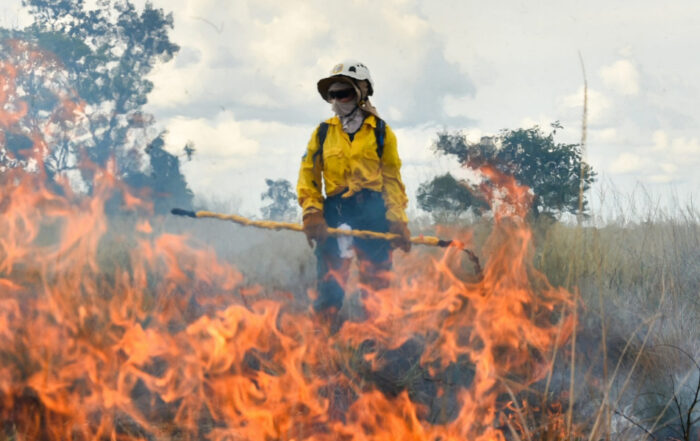
This monitoring is part of a broader strategy of direct protection against intruders who cut down trees, grow coca, or raise livestock in certain areas of the territory. To address this, the guard must be well-equipped, and its mission also includes monitoring forest fires.
Given the difficulty of accessing the most remote and encroached-upon areas of the territory—due to a lack of resources and lodging—the project is strengthening the guard’s patrols with equipment such as telecommunications gear, signage, and checkpoints. Similarly, to address the fact that young people are becoming less and less familiar with their territory, wildlife areas, and sacred sites, an intergenerational initiative is being implemented with elders, whose knowledge is documented on interactive maps created using modern technologies (mapping, GPS, graphic design). These maps will serve both to educate young people and to raise awareness among communities outside the Indigenous territory.
Share This Story, Choose Your Platform!
What is your impact on forests?
What is your impact on forests?