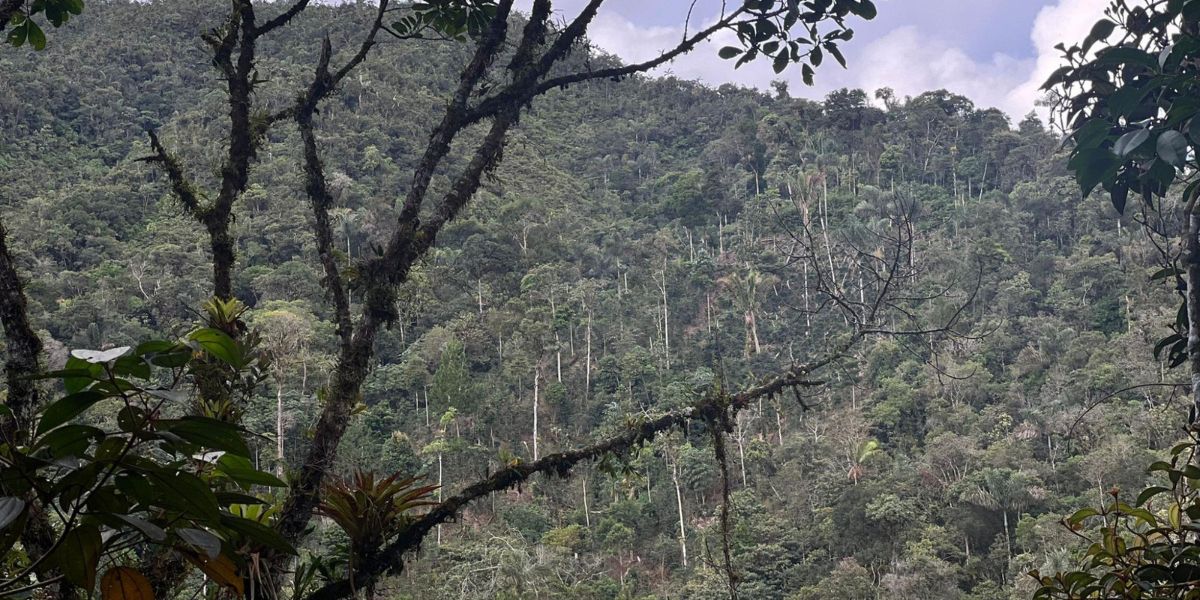
On October 11, 2025, October Big Day 2025 took place, a global birdwatching event created by Cornell University. The Envol Vert Peru team, in collaboration with the Perú Women Birders (PWB) association and the inhabitants of La Nueva Florida village, recorded 100 bird species and compiled 17 complete lists in the buffer zone of the Bosque de Protección Pui Pui, in the district of Pichanaki, Junín region.
This register, which is part of the international eBird platform, contributes to citizen science research and demonstrates the ecological importance of the Bosque de Protección Pui Pui, an area that is the home to unique Andean and Amazonian ecosystems. On a global level, Peru ranks second, with 1,326 species listed, reaffirming its position as one of the countries with the greatest ornithological diversity in the world.
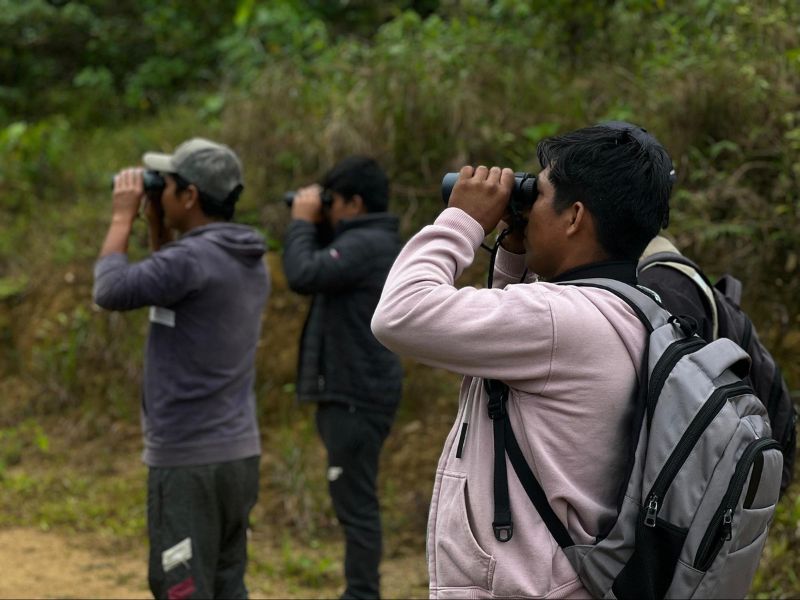
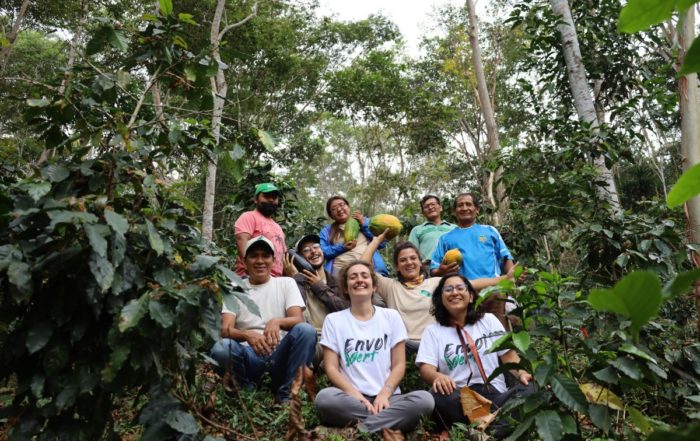
The residents of La Nueva Florida with binoculars, © Envol Vert
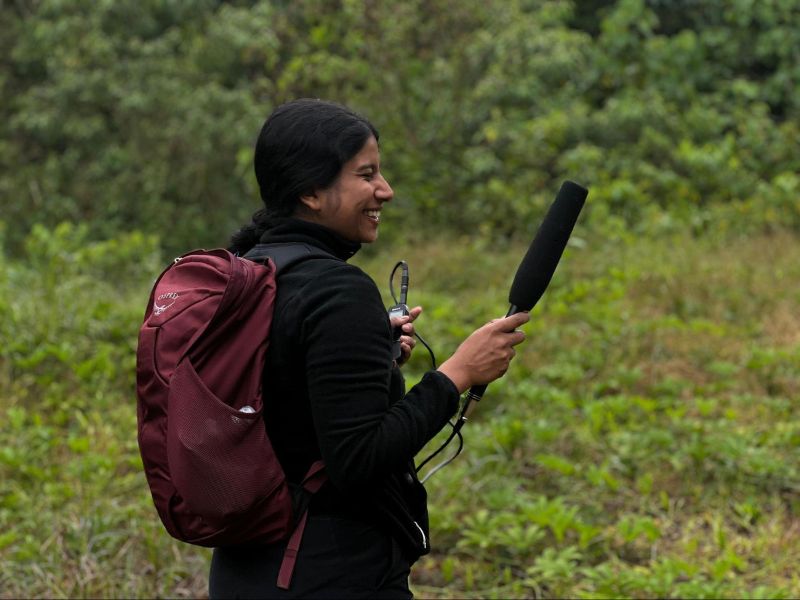
Tanya with a micro, © Envol Vert
The day at La Nueva Florida attracted 16 participants, including expert ornithologists, volunteers, and local residents,who split into two groups and explored the community pathways. Using binoculars, cameras, and the Merlin and eBird mobile apps, the teams visually and audibly identified dozens of species during the day.
One of the highlights was the observation of the golden-headed quetzal (Pharomachrus auriceps), an iconic species of Peru’s rainforests. Its presence, recorded by the team led by Liliana Yicela Quispe Flores of Perú Women Birders, has become a symbol of the ecological richness of Pui Pui.
“Observing a quetzal is not only a wonderful experience, it is also a sign of the healthy state of the ecosystem,” explains Liliana Quispe. “Every observation of this species reminds us why we must protect these forests from deforestation.”
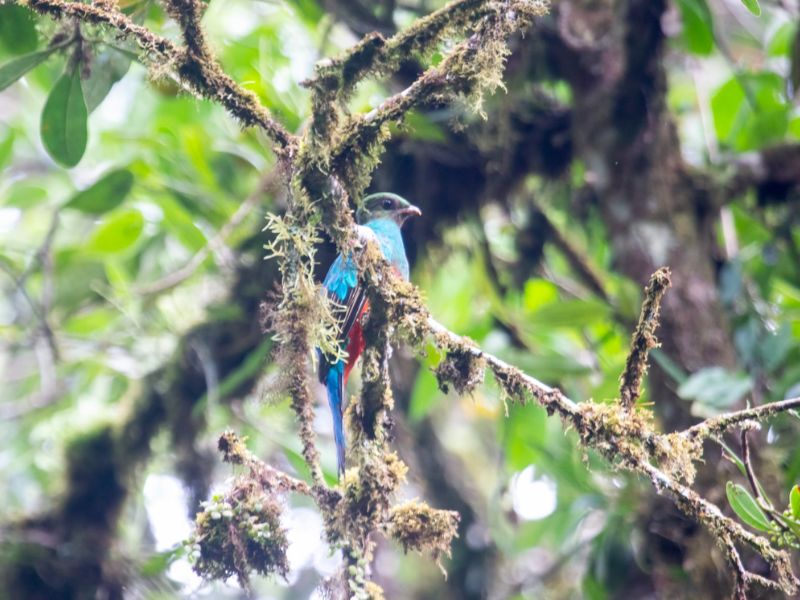
Golden-headed quetzal (Pharomachrus auriceps), © Yisela Quispe
The recording of 100 species in a single day confirms the potential of the La Nueva Florida region as a destination for bird watching and an example of community conservation.
This experience shows that birdwatching can be a powerful tool for promoting environmental awareness, strengthening participatory science, and mobilizing local communities for the protection of their forests.
The ConBosque project is funded by the French Environment Fund and the French Development Agency.
Share This Story, Choose Your Platform!

What is your impact on forests?
What is your impact on forests?