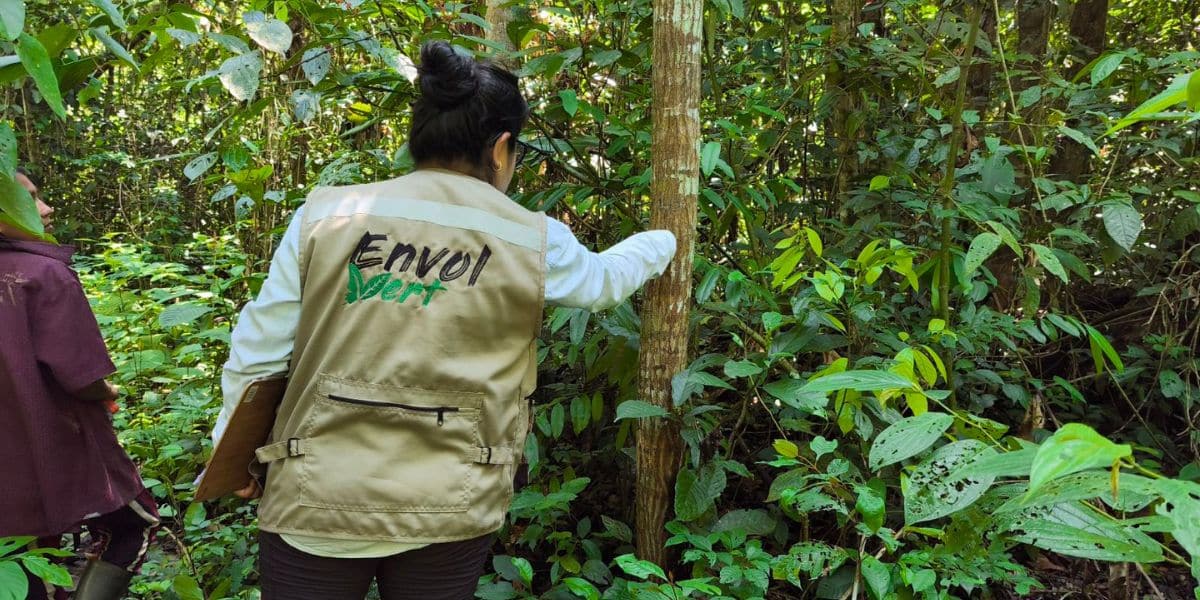
The Amazon rainforests play a fundamental role in the environmental balance of the planet, as they are home to enormous biodiversity and contribute to climate regulation. However, these ecosystems face multiple threats that endanger not only nature, but also the way of life of the native communities that have historically protected and coexisted with the forest in a sustainable manner.
Native communities are both the main guardians of the forest and the most affected by its degradation. For them, the forest is not only a natural space, but also an essential part of their cultural identity, their food, their traditional medicine, and their social organization. Strengthening their capacities and recognizing their leading role is key to achieving effective and lasting conservation of the Amazon rainforests.
Envol Vert’s action
In this context, Envol Vert (EV) reaffirms its commitment to working closely with native Amazonian communities to conserve forests through the ConBosque project. The project’s activities began in two Shipibo-Konibo native communities in the Iparía area of the Ucayali region: Nuevo Ahuaypa and Dos de Mayo, which are part of the consortium that manages the El Sira Communal Reserve (ECOSIRA).
As a first step, community commitment agreements were signed, reaffirming the willingness of both communities to protect and conserve their forests and biodiversity as part of their cultural identity. Women, men, boys, and girls also participated in this meeting, with women’s leadership in organizational and community monitoring processes being particularly noteworthy.
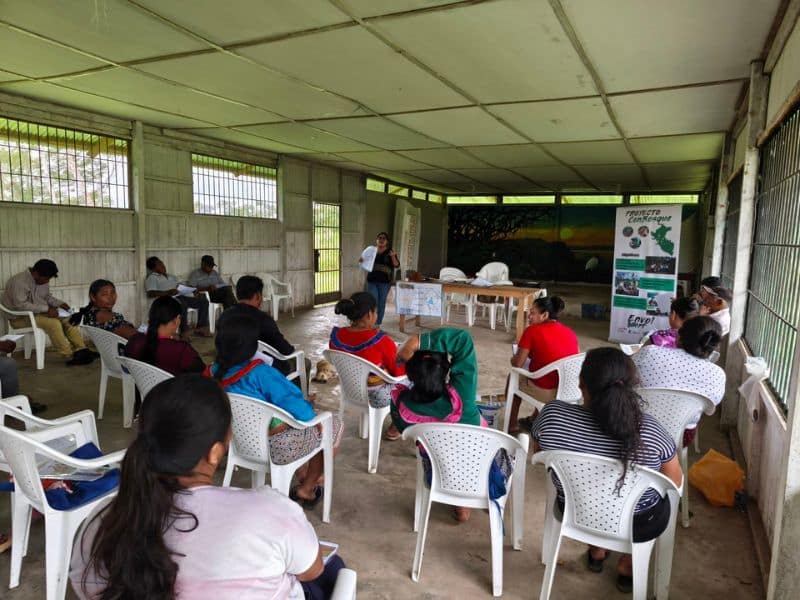
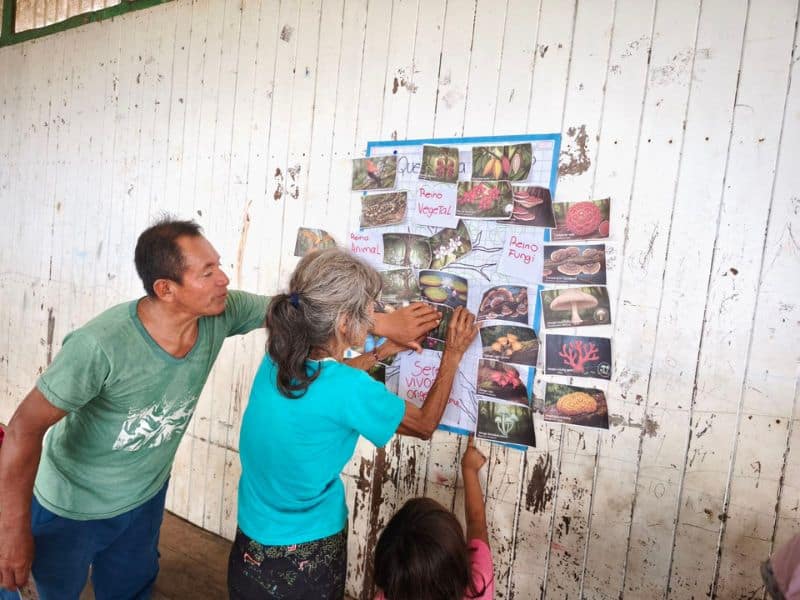
Among the main activities carried out are the strengthening of technical capacities in the recognition of local biodiversity, as well as the organization and implementation of community monitoring committees, which are fundamental for the monitoring and protection of the territory. This work is being accompanied and supported by strategic allies such as the National Service of Natural Areas Protected by the State (SERNANP), the Regional Organization of Aidesep Ucayali (ORAU), and the Federation of Native Communities of the District of Iparia (FECONADIP), strengthening inter-institutional coordination in the area.
As complementary actions, a communal nursery has been set up in each community, aimed at propagating native species of local importance, including forest, fruit, and medicinal species. Likewise, in the native community of Nueva Ahuaypa, communal land is being prepared for the protection of endemic species, giving rise to a small community botanical garden. This space conserves species such as mahogany, chacruna, ayahuasca, ishpingo, shihuahuaco, and native cacao, among others, which are protected and managed directly by the community.
At the same time, various participatory workshops have been developed, such as an introduction to basic biology, participatory science, identification of forest species, taxonomy of living beings, installation and management of nurseries, and preparation of compost bins. These processes have been complemented by property assessments, allowing for a better understanding of the conditions and needs of the participants.
Next Steps
In the coming months, the ConBosque project will continue to strengthen its work with native communities, with the aim of consolidating local capacities for conservation and sustainable forest management. Among the main objectives are the strengthening of community surveillance committees, the expansion and improvement of community nurseries, and the conservation of native and endemic species of high ecological and cultural value.
It also seeks to continue promoting the active participation of women and young people in conservation processes by strengthening their technical and organizational capacities, involving them in community monitoring committees, and encouraging their direct participation in activities such as nursery management, species monitoring, and environmental education. Similarly, community environmental education will continue to be reinforced through participatory workshops, knowledge exchanges, and learning spaces that integrate scientific knowledge with traditional knowledge.
At the same time, we will work to consolidate strategic partnerships with local and regional institutions in order to obtain technical support and ensure the sustainability of our actions over time. Through these strategies, Envol Vert and the ConBosque project aim to contribute effectively to the protection of Amazonian forests, recognizing native communities as key players and fundamental allies in the conservation of the territory.
Share This Story, Choose Your Platform!

What is your impact on forests?
What is your impact on forests?