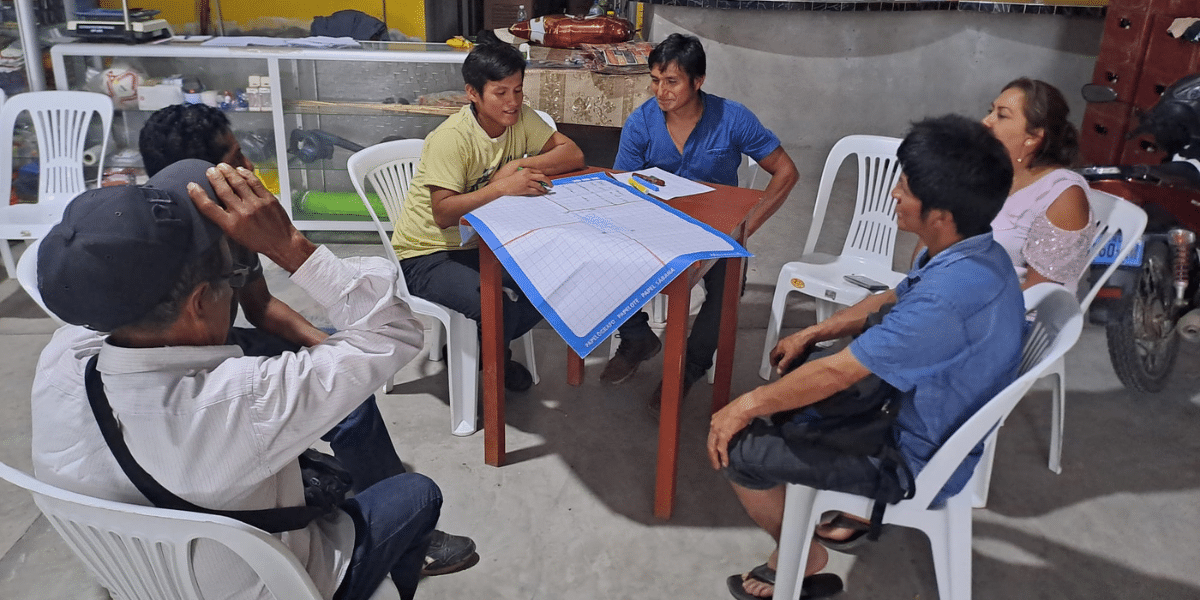
On March 21, a meeting was held with coffee producers from the towns of José Carlos Mariátegui, Pueblo Nuevo, and Santo Domingo de Anda, in the Tingo María area of Leoncio Prado Province, Huánuco. The meeting, which took place as part of the economic alternatives component of the ConBosque project, had a dual purpose: to collectively define the best way to collaborate to strengthen honey production, and to create opportunities for knowledge exchange regarding the rearing of native bees and honey harvesting. Both objectives are essential, and for the team, observing how communities organize themselves to produce honey from native bees has also been enriching.
The meeting began with a presentation by the ConBosque team on the various types of organizations that exist, as well as their characteristics, benefits, and drawbacks. Following this, working groups were formed among the participants to discuss the information presented and analyze which approach they felt was most appropriate for each area. Through dialogue, attendees exchanged ideas, knowledge, and experiences with other community members in order to arrive at the model that best fits their current situation, working methods, and short- and long-term interests. Some opted at that time for informal cooperation agreements; others for an individual approach; and a third group for a combined approach, thereby setting an important precedent for the next stages of the project.
The plan for the coming months is to organize new meetings so that the communities that chose organizational models that best suit their needs can develop a joint work plan and implement the solutions they proposed during the group analysis conducted in the workshop. Likewise, new forums will be organized to gain a deeper understanding of the motivations of the communities that chose to work independently, providing them with guidance on formalizing their operations, clarifying any doubts, and addressing their questions regarding the advantages of the organizational model they selected.
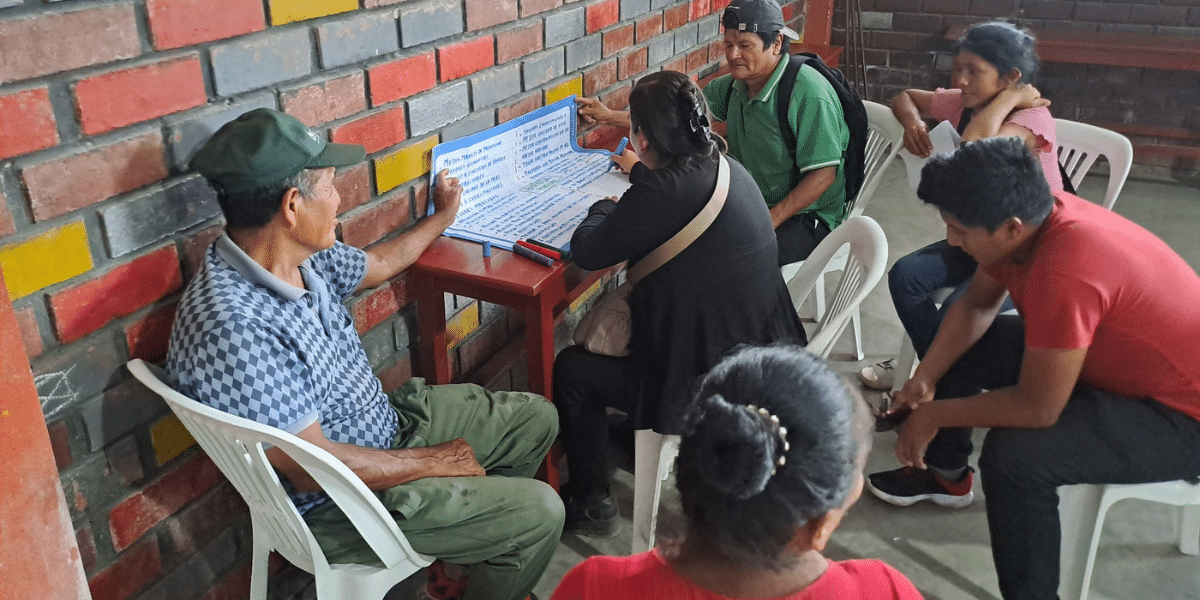
Forums like this one, which brought together 30 participants from various communities, contribute both to the development of autonomy and to strengthening coordination among producers. It is hoped that this mutual and collaborative work and support will continue in the future, both in matters related to the rearing of stingless bees and the sale of this honey, given the properties attributed to this resource in the treatment of respiratory, digestive, and eye conditions.
Continuing with the activities carried out this month, participants in the Ayte village project worked on the construction of a community seedling nursery in the Pichanaki area, in the province of Chanchamayo, Junín. This activity is also part of the ConBosque project’s fieldwork, in coordination with the National Service of Natural Protected Areas (SERNANP). At the same time, an informational meeting was held to present the project to new community members.
In the community of San Luis Alto Ipoki, nine people participated in a training session on agroforestry systems and ecosystem services. The session also served to distribute black walnut (Juglans nigra), one of the economic alternatives promoted by local farmers, and to strengthen the nursery by installing protective netting. Likewise, in Nueva Florida, five participants prepared soil bags for planting high-altitude pakay (Inga spp.), plants that will later be distributed in the town center.
Together, these activities aim to promote productive initiatives that provide economic alternatives to communities, allowing them to make use of forest resources and prevent deforestation.
Share This Story, Choose Your Platform!

What is your impact on forests?
What is your impact on forests?