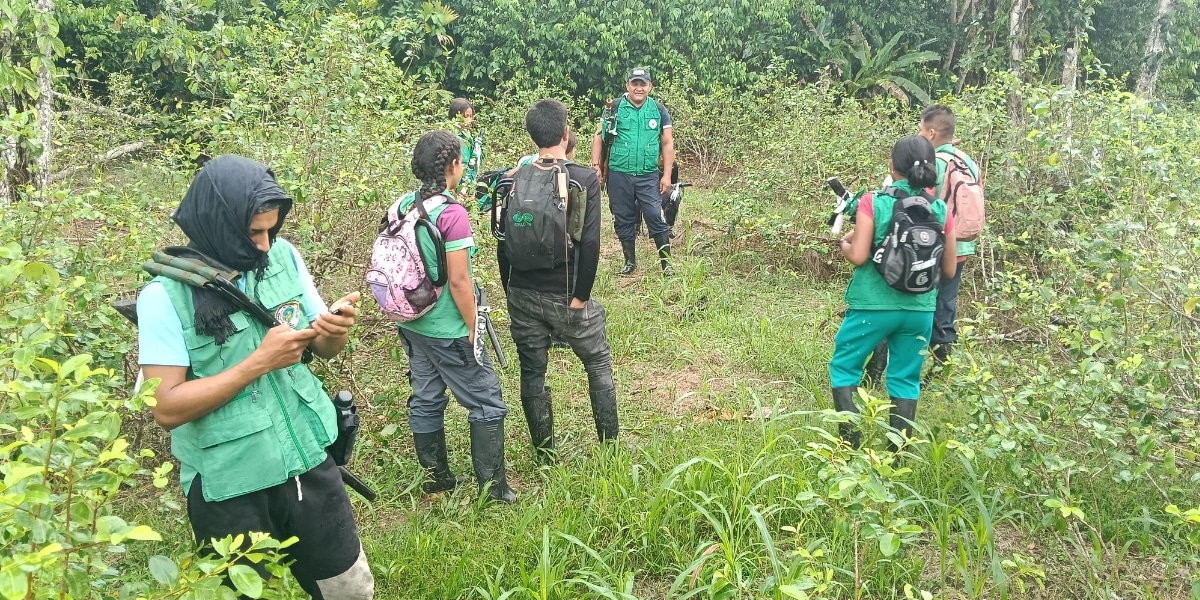
As part of the ConBosque project’s March activities, members of the Santa Cruz de Piñuña Blanco Indigenous Reserve in Putumayo and the Envol Vert team conducted the third of their community biodiversity tours on March 6 and 7. The purpose of this work is to collect biodiversity data from the territory in order to understand and monitor it through observation and the use of citizen science tools.
This activity contributes to the conservation objective set forth in the ConBosque project through scientific monitoring and the participatory characterization of the area’s flora and fauna. As part of the actions carried out, field equipment was distributed, two community monitoring tours were conducted, and data was processed. In addition, a site was selected for the construction of the surveillance and control station, and six camera traps were installed.
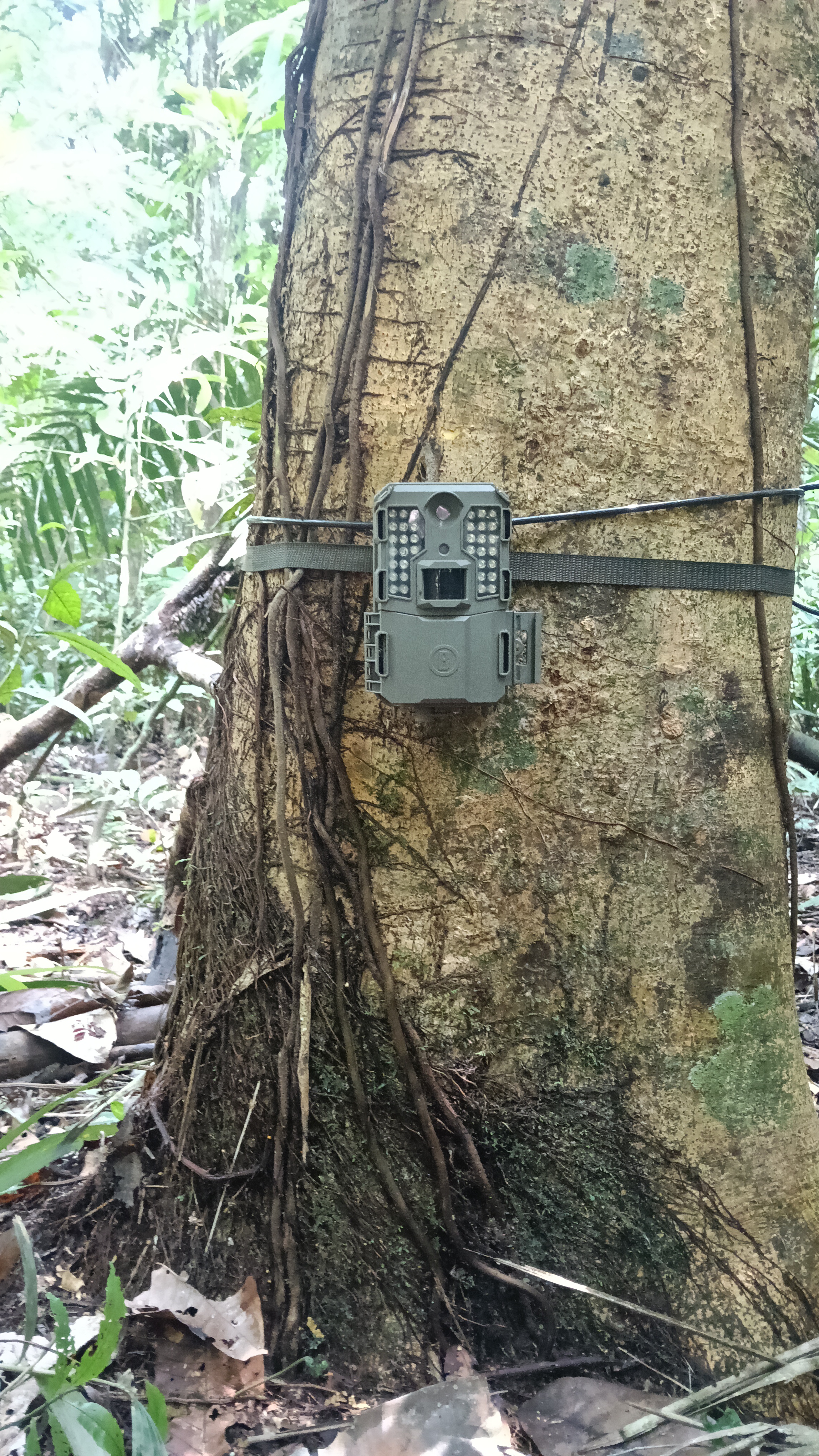
Some of the tools used included Avenza Maps, for mapping and spatially locating elements of environmental and cultural significance; eBird, for organizing bird lists based on open observation surveys; and Merlin, for identifying birds by their songs. In addition, data was downloaded from two camera traps installed during a previous outing, which will enable the detection of wildlife such as mammals, amphibians, reptiles, and birds.
On the first day, the camera trap footage was reviewed, and field equipment was distributed. Additionally, general guidelines on data collection and the use of digital tools were reviewed. Afterward, tasks were assigned to the environmental monitors, and the team headed out into the field. To increase the likelihood of detecting species, participants were divided into groups of no more than 7 people. The teams recorded bird species and noted important locations. The teams recorded bird species and noted the most important locations.
The second day was also action-packed, with the team moving toward the northwestern part of the reserve until they reached the area where it was decided to build the surveillance and control station. The teams took notes on the vegetation, the installation of the fence, and signs of wildlife. Finally, they installed six cameras, placing them at three sampling stations to evaluate the recorded animals from two angles and complete the data collection.
In total, 14 community members participated in and took ownership of the activities on the first day, and 22 on the second. This community monitoring tour was accompanied by Mario Morales, scientific coordinator of the ConBosque project. It is also hoped that these efforts will contribute to strengthening local governance.
In the Piamonte region, the Nature Colombia Agency conducted an ecotourism assessment from March 18 to 24. This study will help define guidelines for a strategy to develop ecotourism as an economic alternative in the region. Activities included visits to five local farms to assess their tourism potential, as well as tours of three nature reserves for birdwatching and hiking.
Finally, the second community inventory survey was also conducted in Piamonte to collaboratively characterize the local flora and fauna, with the aim of contributing to conservation goals through community participation and participatory science.
Share This Story, Choose Your Platform!

What is your impact on forests?
What is your impact on forests?