
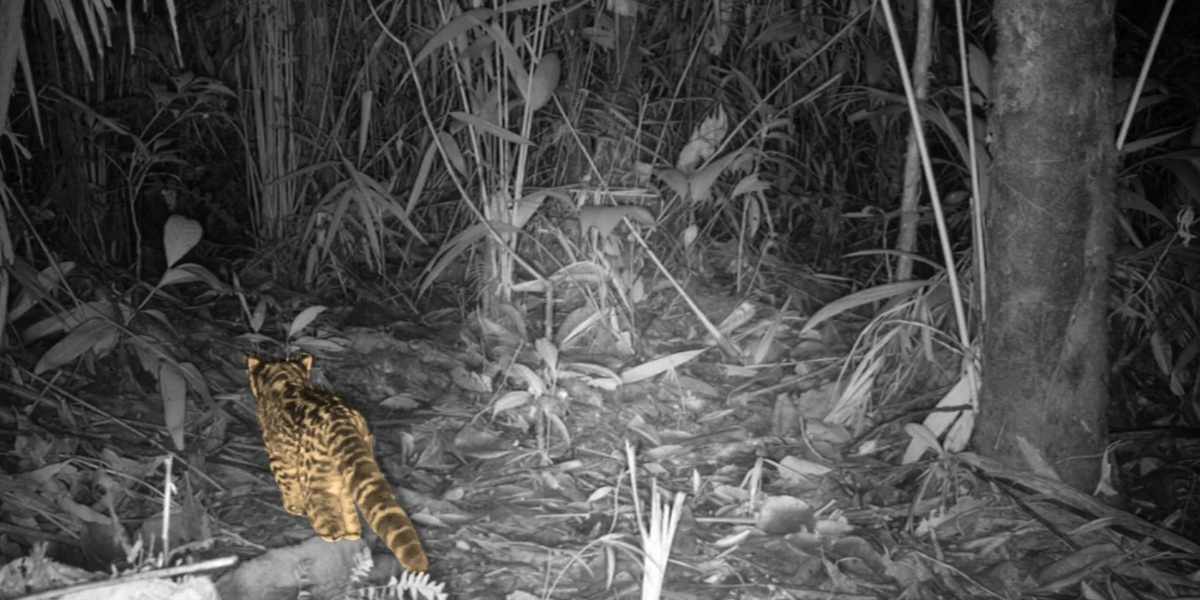
Camera traps installed on residents’ plots in the Pui Pui Protection Reserve, in the Junín region of Peru, have made it possible to observe the area’s wildlife more closely. By establishing a first list of species to protect, residents and various participants involved in this initiative, including Envol Vert, were able to draw up an initial and highly informative assessment of the situation.
A method for observing the wild fauna of the Pui Pui Protection Reserve using cameras
Between November 2025 and March 2026, twelve camera traps installed on three plots in the Nueva Florida sector, in the buffer zone of the Bosque de Protección de Pui Pui, recorded a total of 880 independent wildlife events. This monitoring effort, carried out by SERNANP in collaboration with the NGO Envol Vert and the ACODI association, as part of the ConBosque project, represented a cumulative sampling effort of 1,203 trap-days and documented eleven taxonomic groups, from birds and rodents to felids and the emblematic spectacled bear.
The devices were installed on the properties of three participants, at altitudes ranging from 1,316 to 1,716 meters. This variation, combined with differences in vegetation cover, largely explains the differences observed among the three sectors: participant 1’s plot accounted for 41.2% of the records, or 362 events, followed by participant 2 with 35.3%, or 311 events, and participant 3 with 23.5%, or 207 events.
Surprising results that make it possible to compile the list of species of conservation interest
Birds were the most frequently recorded group, with 322 records including tinamous, doves, and thrushes, among other species typical of the understory. Rodents ranked second with 283 events, dominated by the paca and the agouti. Procyonids, represented by the mountain coati, totaled 151 records and stood out for moving in large family groups, a social behavior that the cameras captured several times, including scenes with young individuals.
Beyond the numbers, the discovery that most excited the teams was the presence of the spectacled bear, the only bear species native to South America. It is a priority species in the 2025–2030 Management Plan for the Bosque de Protección de Pui Pui, and its appearance confirms that this buffer-zone corridor continues to function as a transit route and refuge for species with large habitat needs.
The list of species of conservation interest is completed by four wild felids — jaguar, oncilla, ocelot, and margay — as well as the jaguarundi and the tamandua. Among the birds, Spix’s guan stands out for its role in seed dispersal and forest regeneration, while bats and armadillos completed the mosaic of species detected on the three plots surveyed.
Work that supports community-based and ecological monitoring of the area
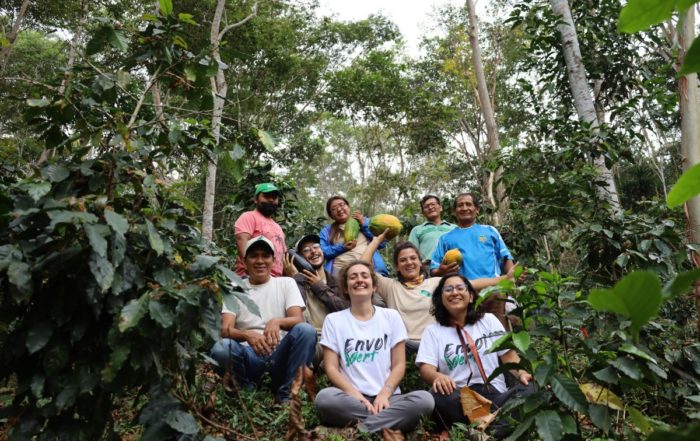
This work would not have been possible without the collaboration of the families, who allowed the cameras to be installed during several months of fieldwork. Their participation shows how conservation is strengthened when it is built with local communities, and confirms the commitment of the ConBosque project to protecting biodiversity in the Pui Pui buffer zone.
The results will serve as a reference for future assessments and to guide management actions, environmental outreach, and the strengthening of community monitoring in the Nueva Florida sector, helping to keep the ecological functioning of one of the last mountain forest and yunga refuges of the Pui Pui Cordillera active.
Share This Story, Choose Your Platform!

What is your impact on forests?
What is your impact on forests?