


Introduction
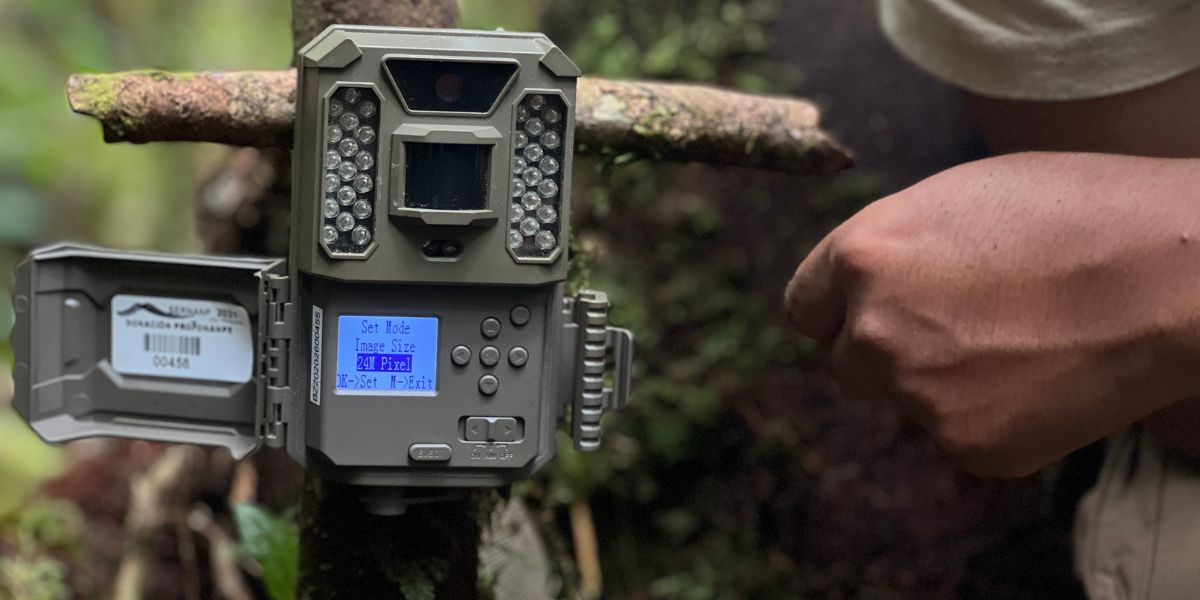
As part of the “Con Bosque” conservation project in the Peruvian Amazon, and following participation in the May Global Big Day dedicated to bird monitoring, Envol Vert launched a wildlife monitoring program focused on terrestrial mammals. This marks the first time the organization has used camera traps as a monitoring tool. These devices are essential for studying and conserving biodiversity, as they allow for the recording of animal presence and behavior in their natural habitat. The information collected strengthens the management of protected natural areas and contributes to more effective conservation efforts.
Support from SERNANP – Pui Pui Protected Forest
The support of SERNANP (National Service of Natural Areas Protected by the State) of the Bosque de Protección Pui Pui was key to the implementation of this activity. The institution not only provided the necessary equipment, but also delivered practical training on their proper use, led by a biologist specialized in mammals. This training covered the entire process, from initial setup and the technical criteria for selecting installation sites to the placement of the cameras in the forest.
The installation was carried out on the plants of coffee producers participating in the “Con Bosque” conservation project, located in the buffer zone of the Bosque de Protección Pui Pui, in the Nueva Florida population center.
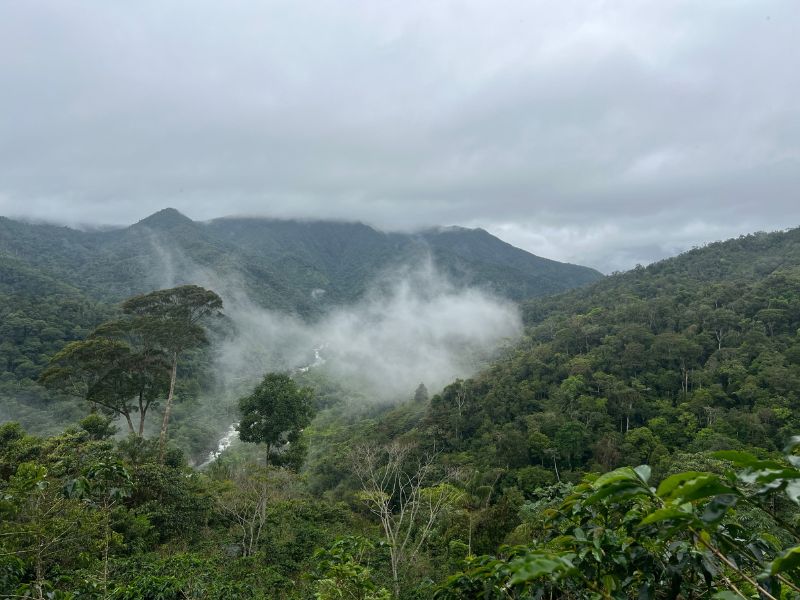
Buffer zone of the bosque de protección Pui Pui,© Envol Vert
This area is a key location where human activity combines with high biological diversity. Emblematic species such as the spectacled bear (Tremarctos ornatus), the armadillo (Cingulata), small felines such as the jaguarundi (Herpailurus yagouaroundi), and various mountain forest birds can be found there. Thanks to this collaboration, monitoring will provide more information about the wildlife that uses this ecological corridor and strengthen conservation efforts in the area.
A participatory and awareness-raising activity
Following standard protocol for camera traps, the technical team and producers explored the forest near the plants to identify the most suitable sites for installation. The experience of the producers, combined with the technical expertise of the team, facilitated the selection of locations with a high probability of recording wildlife. Natural trails, footprints and other signs indicating the possible presence of wildlife were observed, with priority given to areas with little human intervention.
Once the locations had been defined, the cameras were installed, taking care to adjust the angle and framing. The GPS coordinates and relevant observations were also registered. With this, the cameras were ready to begin continuous recording of species, providing information that will allow for a better understanding of the ecological dynamics of the area, support future conservation actions, and raise awareness in local communities about wildlife monitoring activities.
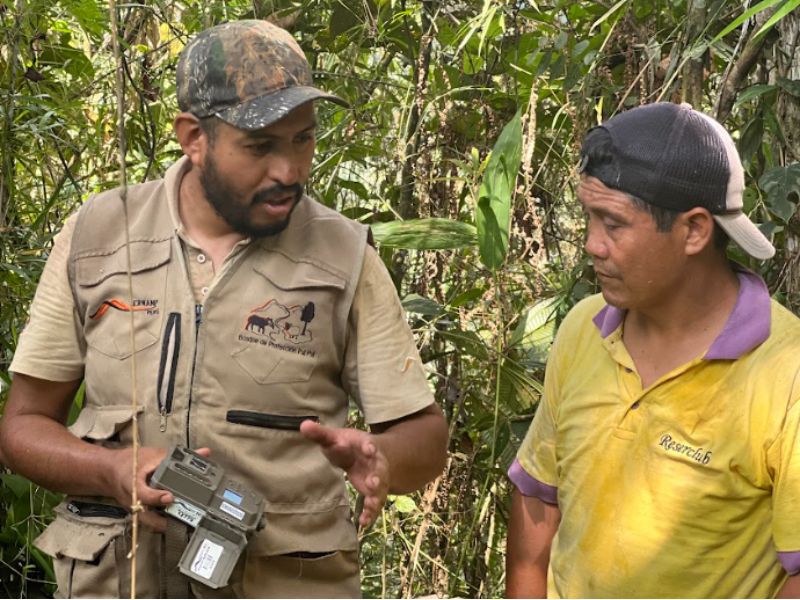
SERNANP BPPP biologist, and project participant, © Envol Vert
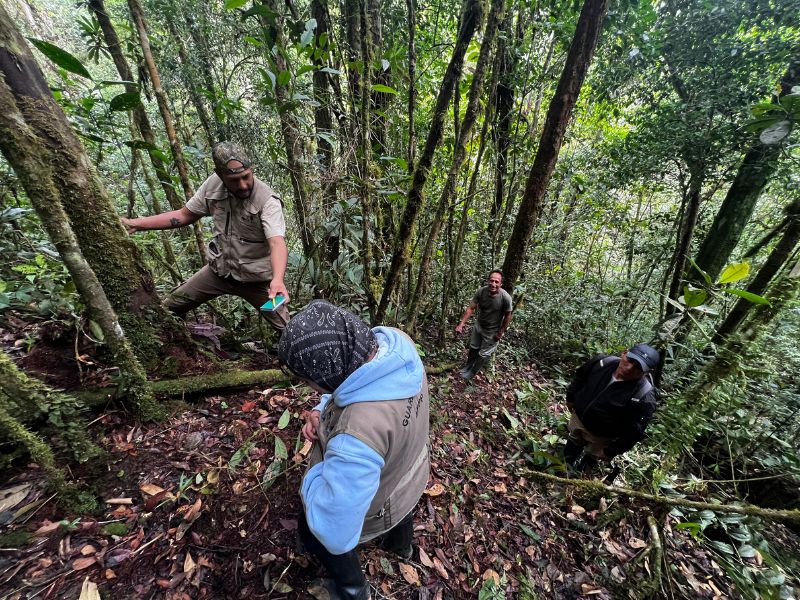
Setting a camera trap in the forest, © Envol Vert
Next Steps
In November, the team will make another visit to check the cameras, change the memory cards, and analyze the first images. This activity will again be coordinated with SERNANP.
The initial results will enable us to evaluate the diversity of species present, improve conservation strategies, and strengthen collaboration with local communities for sustainable forest management.
Share This Story, Choose Your Platform!


What is your impact on forests?
What is your impact on forests?