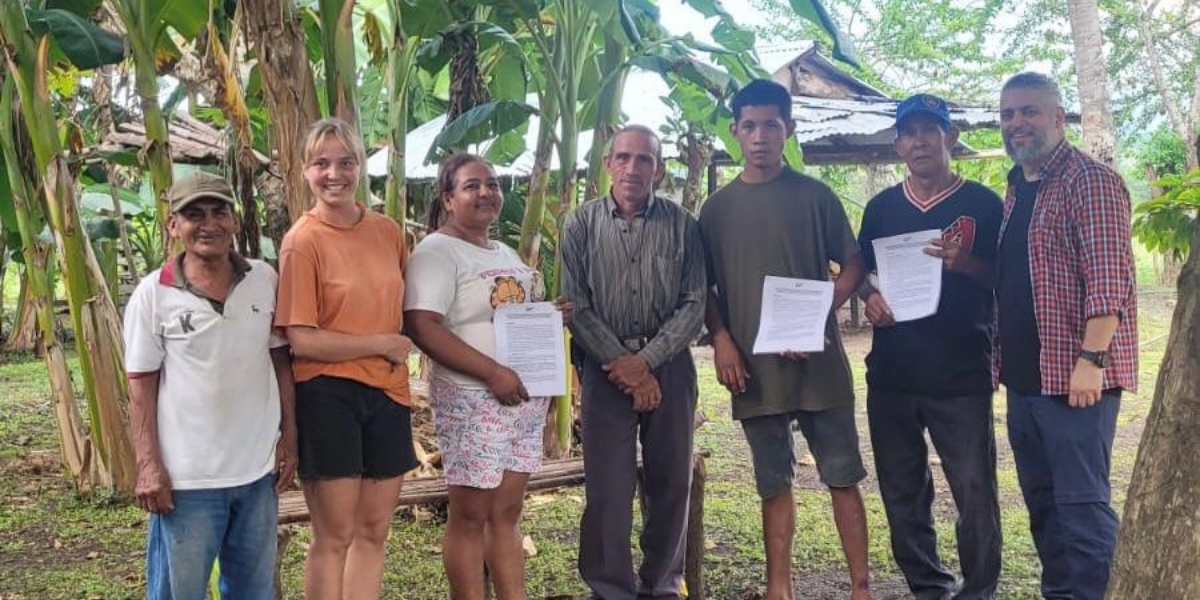
Communities from the Montes de María region in the department of Sucre and from the Serranía del Perijá in the department of Cesar are celebrating a new step forward in the protection of their tropical dry forests with the signing of collective conservation agreements במסגרת the Community Conservation Strategies (ECC). This initiative is led by local communities and their grassroots organizations, including Community Action Boards (JAC), producers’ associations, women’s associations, Indigenous councils, community enterprises, among others.
Thanks to this alliance, priority actions will focus on the conservation of tropical dry forests, water springs and sources, riparian areas, and the establishment of biological connectivity corridors across an area of approximately 340 hectares. In the long term, these efforts aim to ensure water security in the territories, restore degraded areas, strengthen economic alternatives for rural families based on the sustainable use and management of forest resources, and provide safe habitats for threatened local wildlife, such as the white-headed tamarin ( Saguinus oedipus) and the margay (Leopardus wiedii), among others.
Likewise, the creation of strategic partnerships to advance rural development and improve quality of life in the territories is another priority action outlined in these agreements, with the goal of strengthening productive capacities and generating projects linked to nature-based tourism.
As part of this strategy, designed for a two-year timeframe, the participation of other local stakeholders with an influence on forest, water, and biodiversity conservation is expected. Communities have chosen to involve these actors in order to consolidate the initiative and ensure the implementation of the activities set out in the action plans accompanying these agreements. Territorial entities such as the governments of Sucre and Cesar, municipal administrations, and the corresponding environmental authorities are leading this process, with the support of other non-governmental organizations, social organizations, and academia.
Finally, these conservation initiatives seek to consolidate a model of governance and self-management in which communities themselves can autonomously, and without the need for external agents, make decisions, manage their own resources, and strengthen their leadership and cultural identity, for the benefit of their natural resources and the well-being of their communities.
Share This Story, Choose Your Platform!


What is your impact on forests?

What is your impact on forests?