March 2015
New plantations
Since the first planting operations, some several thousand trees have been planted by Envol Vert’s local partner, the Union Salva Bosque (USB), on three farms around Palomino.
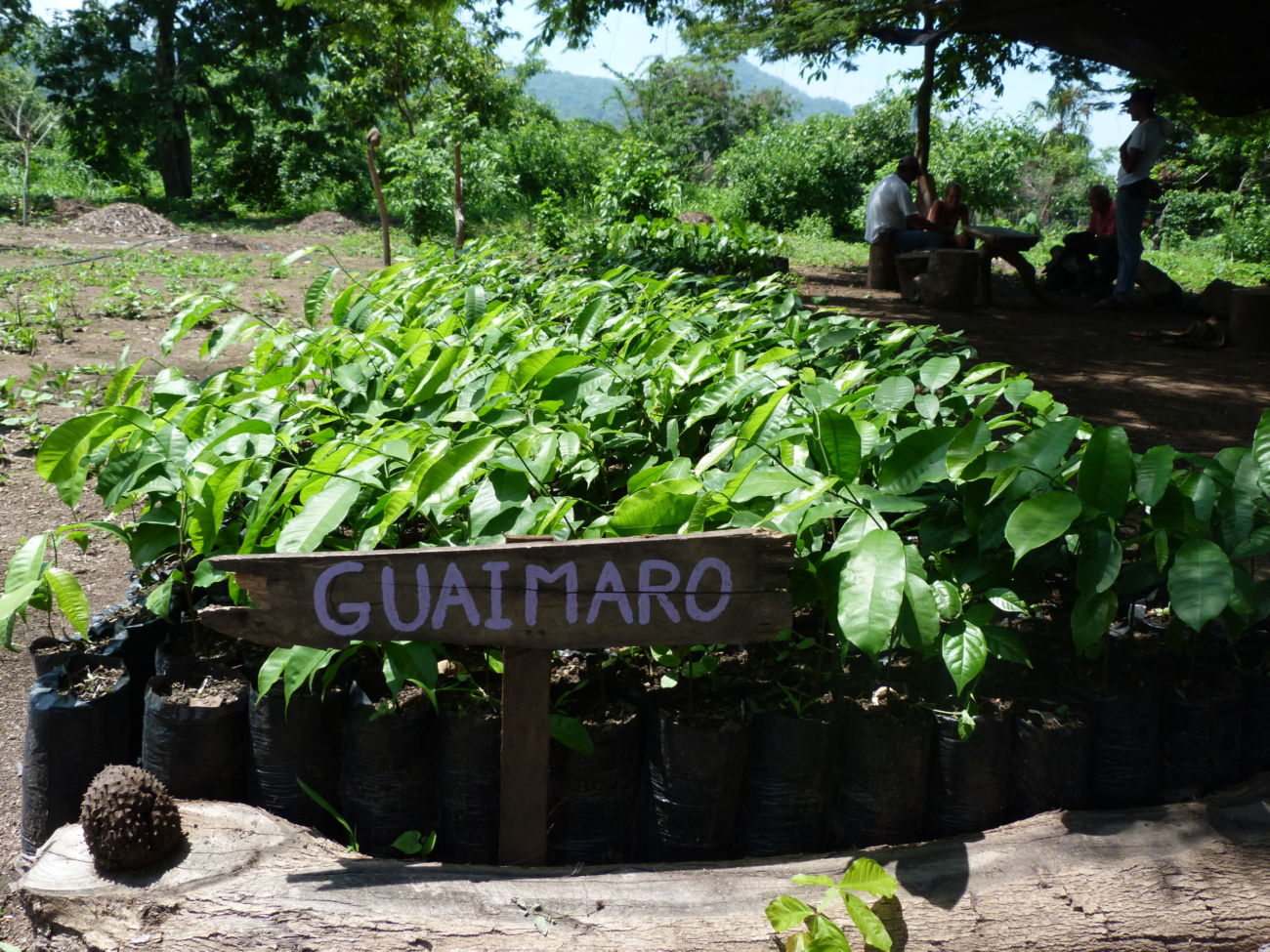
 With the arrival of Alice, a volunteer on the project, new opportunities will be available to USB, which may lead to more members for this association of former loggers and their wives. In fact, we are setting up an agro-forestry and an inclusive vegetable garden project on an almost abandoned farm, where the remaining trees, mainly guaimaros, will be used together with agricultural crops (maize, banana trees, etc). Some days up to ten people come and work towards the future of the farm; these are people who no longer go off to take part in the illegal logging of native Sierra Nevada tree species.
November 2014
1,200 trees planted on the farms
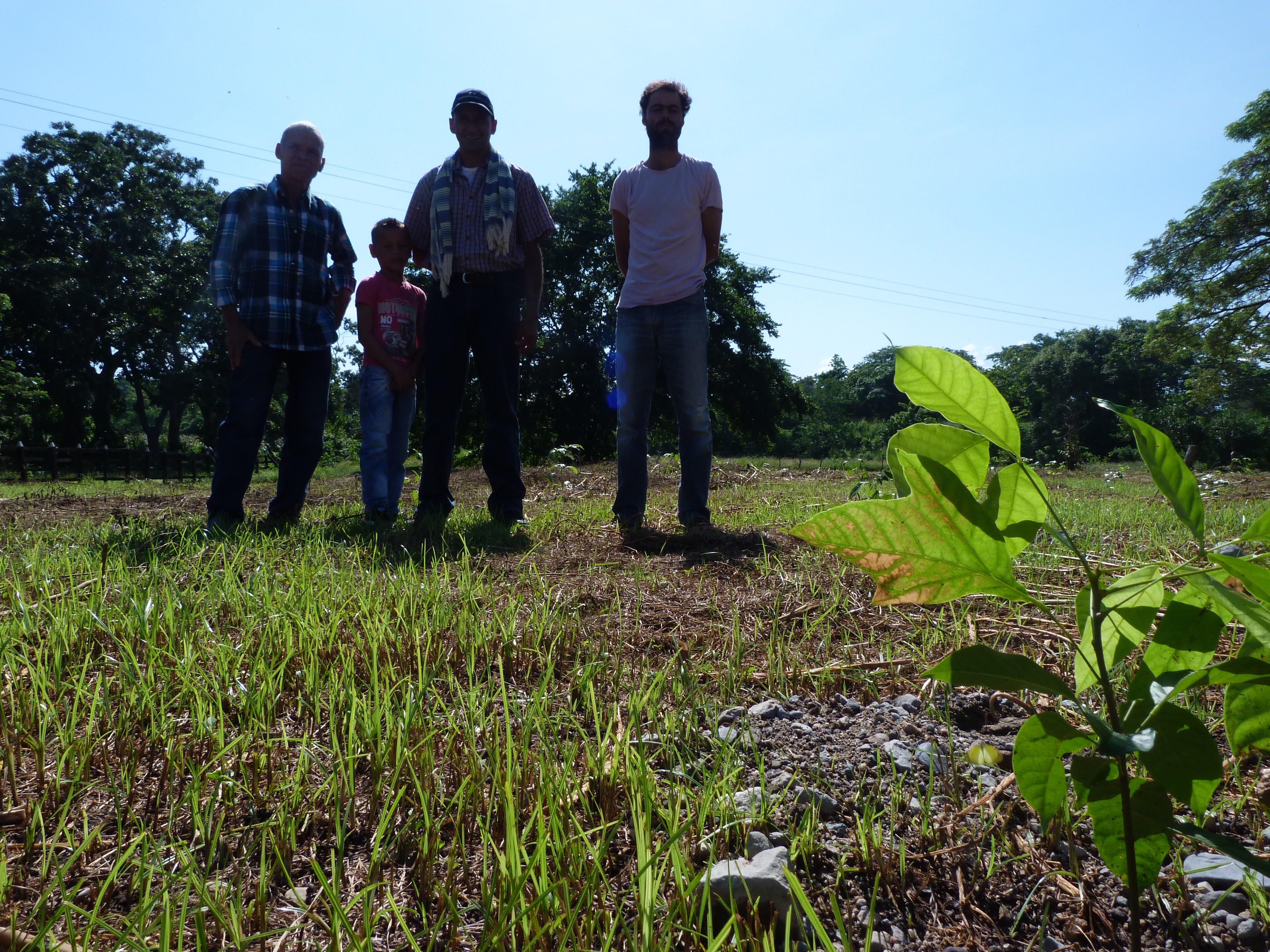 As the winter cycle begins in October, Union Salva Bosque, supported by Envol Vert, has made the most of this period favourable to planting, by planting the first 1,200 trees on three different farms. Work was done with full cooperation from the landowners who made USB’s work easier by providing food and transport, as well as the land already cleared and ready for planting. Some landowners also showed their support by providing USB with a financial donation. It should be noted that the seedlings were taken care of by USB in the tree nursery until the time for planting.
A vegetable garden for USB
Thanks to support from Envol Vert and in addition to its work at the Futuro de la Sierra tree nursery, USB has started to plant maize, manioc, bananas, plantain, watermelon and cucumbers. The harvest will be used to feed the families involved in the project or for sale, the idea being to help develop the autonomy of USB for reforestation of the Sierra Nevada.
October 2014
The Noya Maya seedlings are growing!
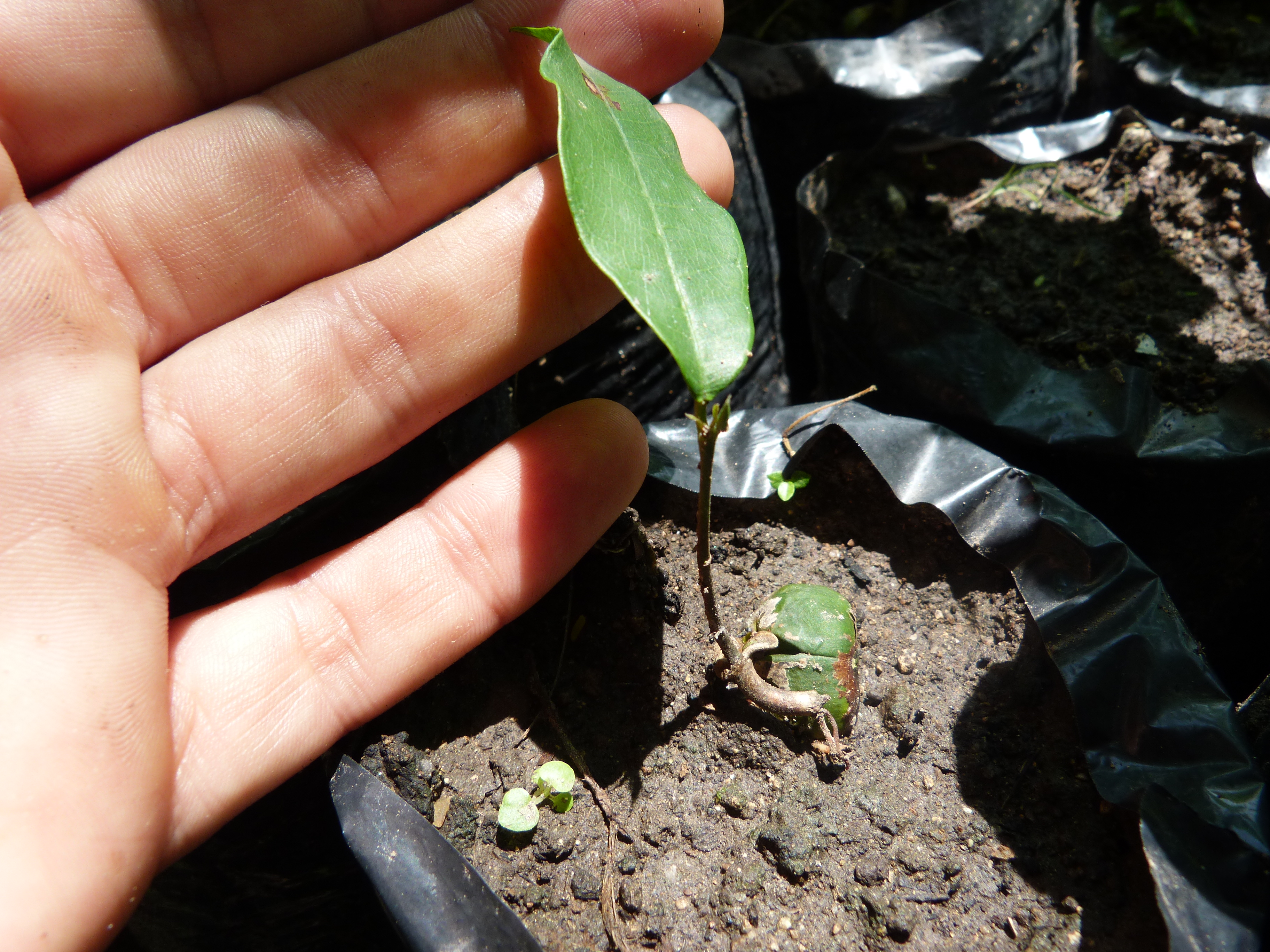 Despite problems with obtaining seeds for native tree species, Noya Maya nuts were donated to encourage the initiative and support the work done. We can already count on some 600 seedlings now growing and which will be ready for planting for the next winter (rain) cycle.
September 2014
“Adopt a tree”
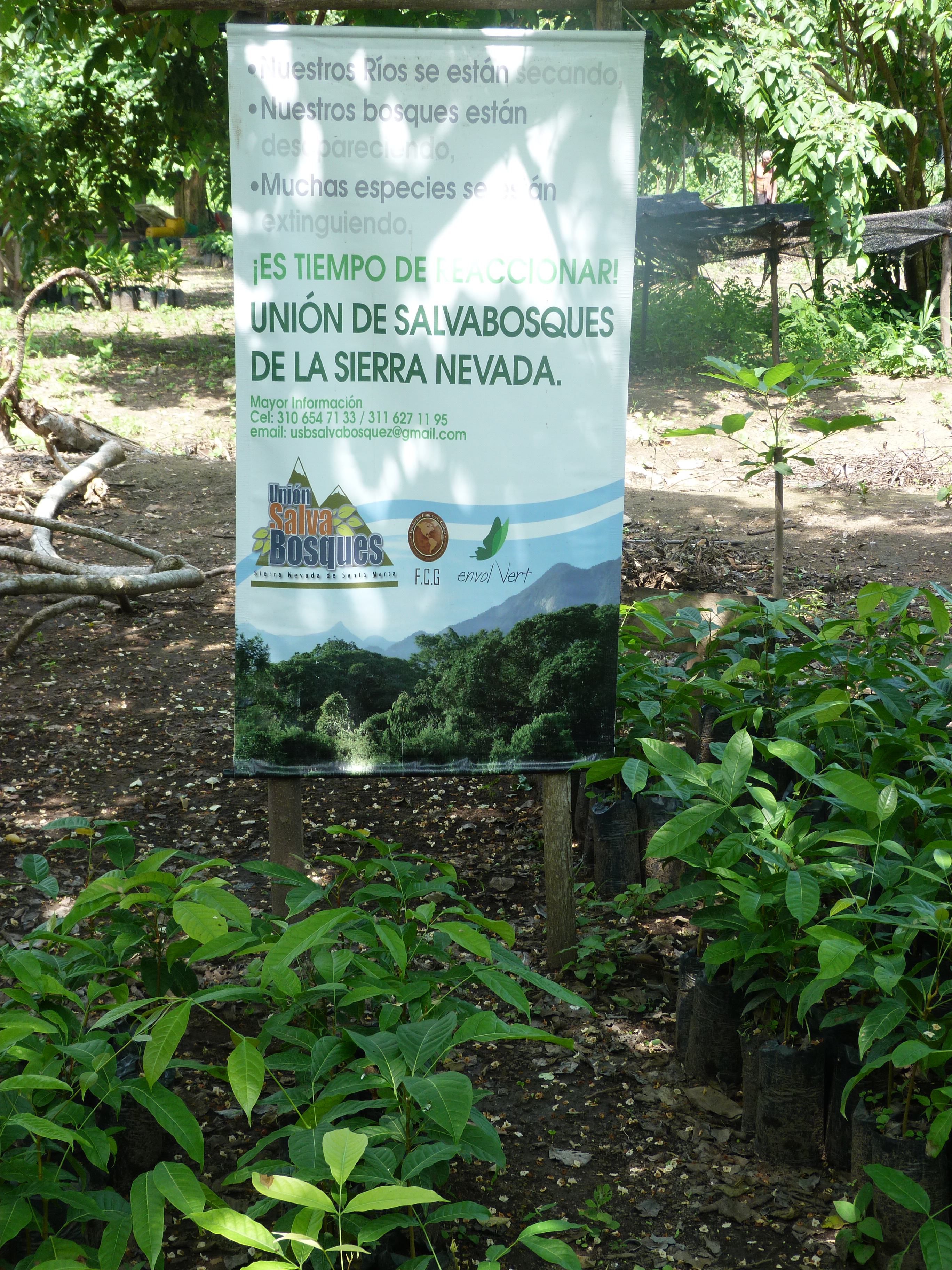 This August, Lucie arrived from south-east France to help with project management and the drive for financial autonomy, while pursuing the goal of reforestation. Her presence has enabled the introduction of a new initiative. In order to raise funds to finance reforestation and raise tourists’ awareness of environmental issues, USB has introduced a tourist offering. This includes a visit of the tree nursery, after which tourists are invited to adopt a tree and go and plant it with Juan and Edgar.
August 2014
Agreements signed with landowners
![[NOYER_USB]Reunion_ferme1](http://envol-vert.org/wp-content/uploads/2012/02/NOYER_USBReunion_ferme1.jpg) To proceed with reforestation, we are required to establish written agreements setting out the terms for USB and for the landowners who will commit to maintaining conditions suitable for the development of the trees over the long term. In this document, it is agreed that USB will provide its plants, will plant them on a voluntary basis and will take care of them for a six-month period, with the landowners’ making financial contribution in the form of donations. A portion of the trees grown in the tree nursery may be sold to fund reforestation. In fact, certain landowners expressed their wish to buy plants and services from USB. By the end of the year, there are plans to plant 2,500 on five areas of deforested land around Palomino, for a total of 4 hectares for reforestation.
To proceed with reforestation, we are required to establish written agreements setting out the terms for USB and for the landowners who will commit to maintaining conditions suitable for the development of the trees over the long term. In this document, it is agreed that USB will provide its plants, will plant them on a voluntary basis and will take care of them for a six-month period, with the landowners’ making financial contribution in the form of donations. A portion of the trees grown in the tree nursery may be sold to fund reforestation. In fact, certain landowners expressed their wish to buy plants and services from USB. By the end of the year, there are plans to plant 2,500 on five areas of deforested land around Palomino, for a total of 4 hectares for reforestation.
June 2014
The “Futuro de la Sierra” tree nursery
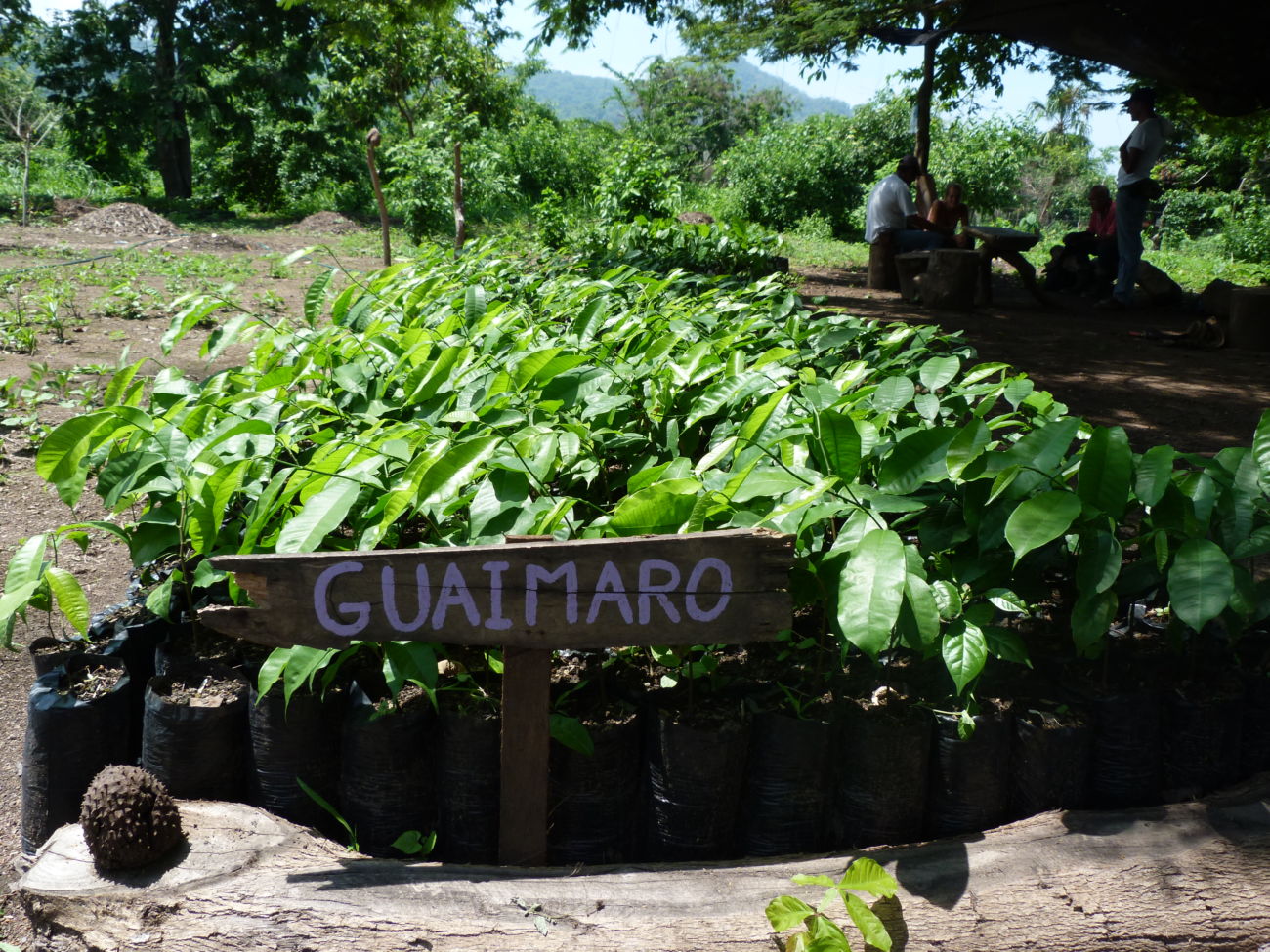 Thanks to the reliable and thorough job done by the secretary of USB, Edgar Rueda, and his legal representative, Juan Rodriguez, a tree nursery containing more than 4,000 trees has been established in just a few months. It contains Guáimaro (1,300 plants), Cedro caoba (1,700 plants), Guadua (1,000 plants), Roble (400 plants), Mastre (150 plans), Mango (250 plants), Caracoli (100 plants), Macondo (10 plants), Guanabana (30 plants), Mamones (4 plants) and Olive (30 plants). This space is more than just a nursery, as it plays hosts to debates, meetings and gatherings focused on environmental issues. At the same time, there is room to grow vegetables.
February 2014
The project moves forward with Union Salva Bosque
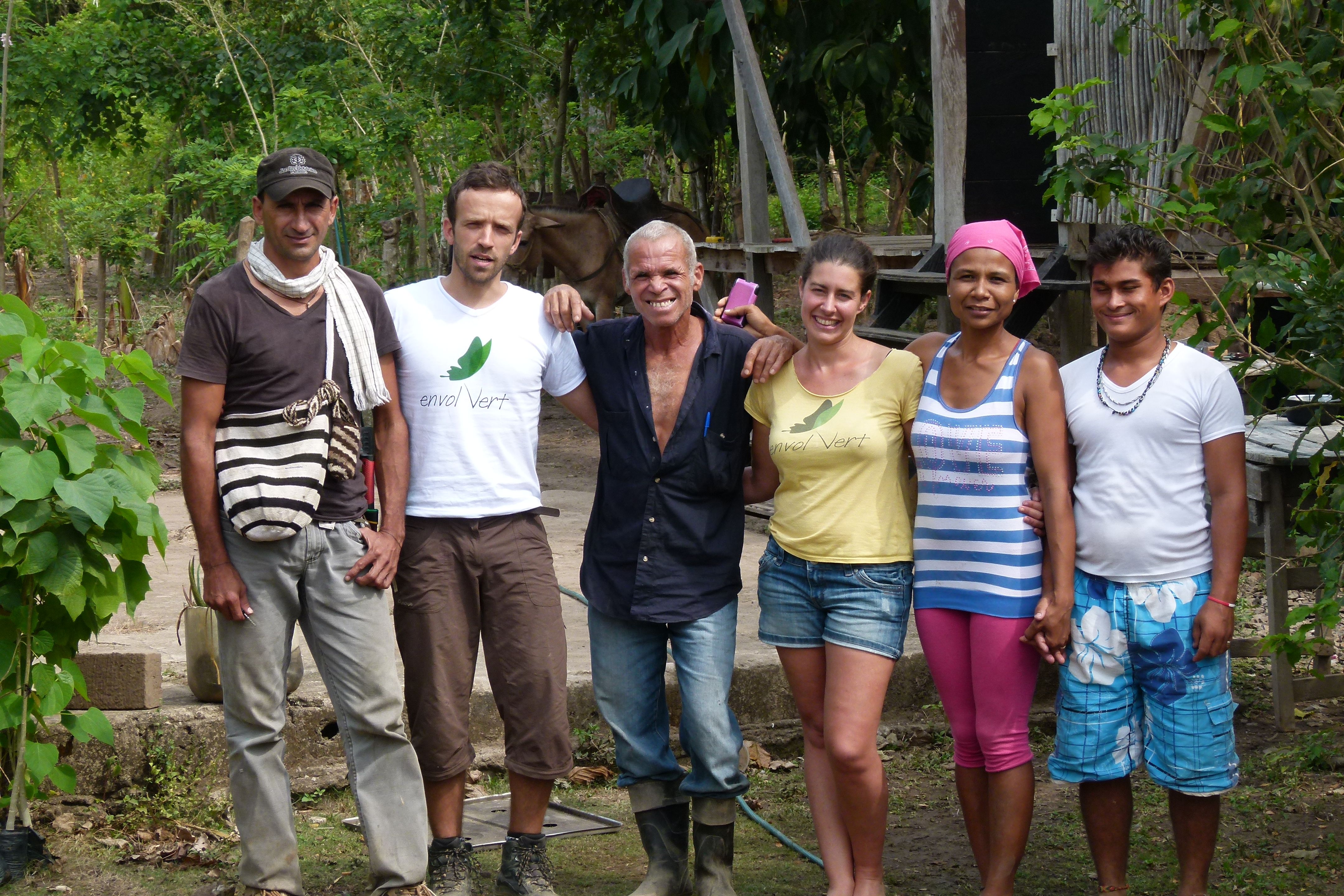 After some great achievements for the pilot project set up with Fundacion Nativa, the project is continuing in the same region but in a slightly different form with Union Salva Bosque.
Union de Salva Bosques was formed in the village of Palomino, in the Guajira department of Colombia. It is a grouping of 23 former illegal loggers who are looking to forge a new career for themselves. The association has been set up in accordance with the regulations and its goal is to replant the trees that its members used to fell in the Sierra Nevada around Santa Marta. In actual fact, there more than 500 chainsaws operating illegally in the Sierra and an estimated 100,000 trees felled each year. Our partnership with USB will first involve the set-up of a tree nursery where native species, threatened with extinction, will be cultivated. A partnership agreement has just been signed.
July 2013
Trees taller than any of us in just one year!
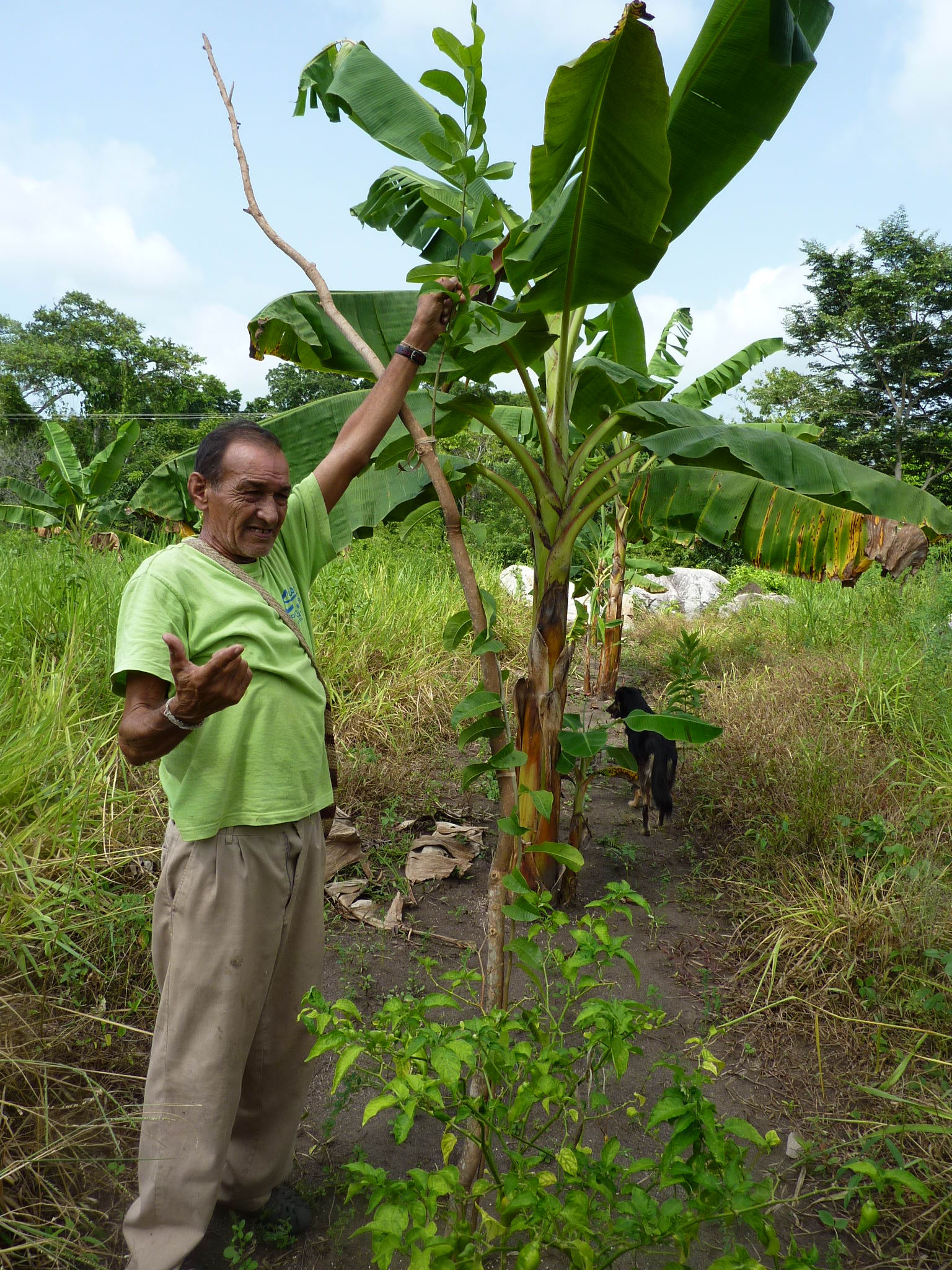
During Envol Vert’s last field visit, we drew up a recap of the changes at the experimental Noya Maya plantation covering one hectare, alternating with farm crops. The manioc had already been harvested while the maize produced 300 cobs plus its leaves that feed 10 cows for three days; flageolet beans were planted to replace the maize (with 500 grams of seed) and have already produced almost 20 kg. It is now time to start harvesting the chilli peppers and plantain bananas. Some of the Noya Maya trees (planted together with chili pepper and plantain banana crops) are now taller than any of us, as this photo featuring the head of the Nativa foundation shows.
It should be noted that the summer in Colombia was especially hot and dry, requiring more tending to the plants in the Sierra Nevada (watering, organic fertilizers, etc.).
March 2013
Luis, a journey to protect the forest
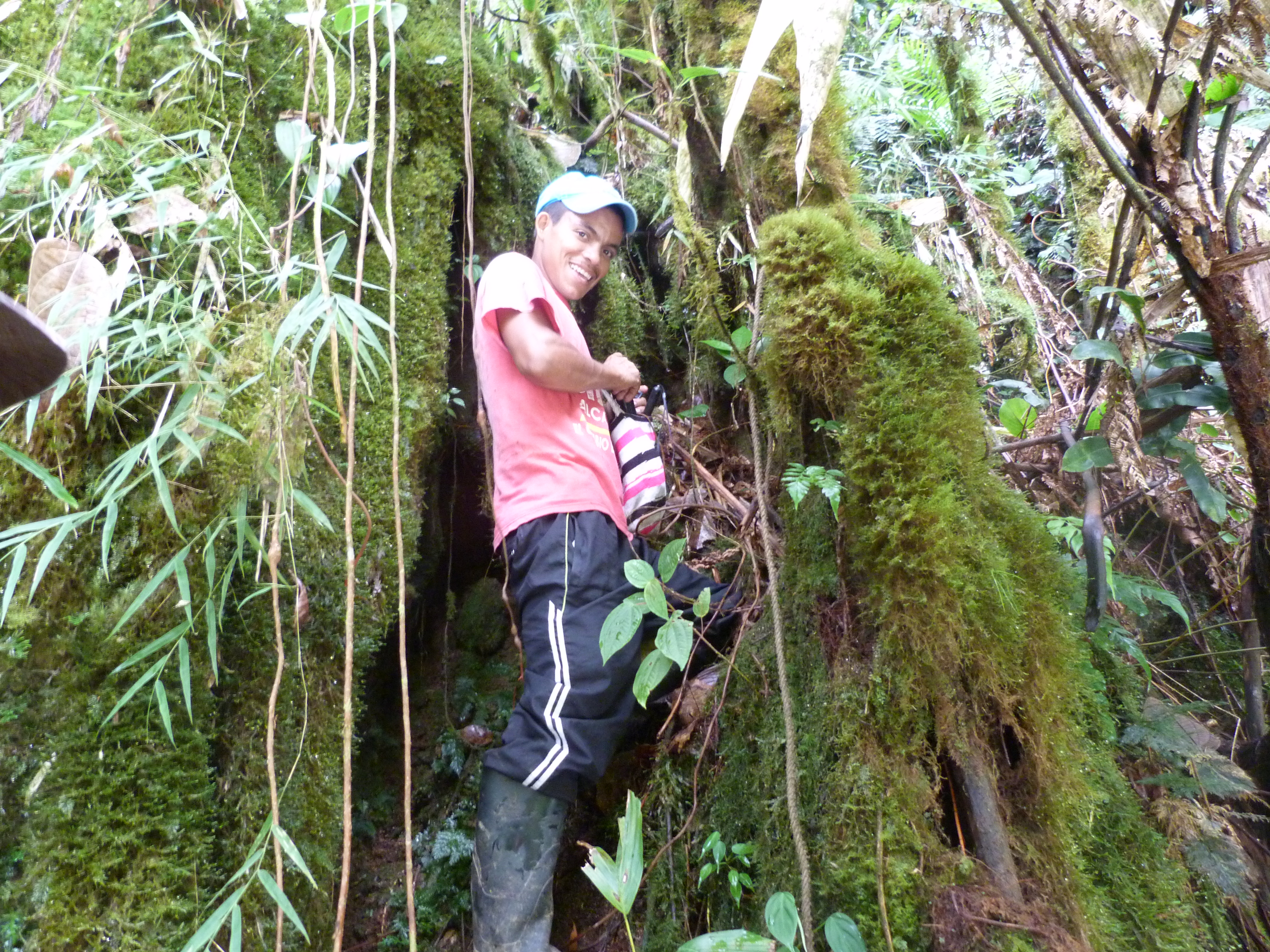
20-year-old Luis works to support Cayo and the team to plant and tend to Noya Maya along the banks of the Rio Ancho river. He is also a guide in the Sierra Nevada and is very familiar with local biodiversity. However, Luis has not always worked to protect the exceptional biodiversity of the Sierra Nevada. Between the ages of 11 and 16, he was involved in illegal activities in the region, like many of his contemporaries as that was unfortunately the only way to make money. After having indirectly contributed to biodiversity loss in the region, he is now fully involved in its protection.
Luis told us about his job: “Planting trees along the riverbank not only protects biodiversity, it also helps conserve river water, thanks to the action of the forest.”
February 2013
3,000 trees planted along the banks of the river
A number of rivers with their sources in the Sierra Nevada are starting to experience falling water levels. Other than climate change, the loss of forest cover along the river banks is a major factor in rivers drying up. By consolidating the riverine forests along the Rio Ancho by planting Noya Maya trees, one of the goals for Envol Vert and Fundacion Nativa is to prevent the river drying out by maintaining significant forest cover. However, by selecting the Noya Maya and its highly nutritive nuts, all the local population will feel the benefit in terms of food supply over several generations. Eventually, the South American tapir will re-establish links with the ocean thanks to the trees that will provide food in the forest reserves of the Sierra up to the mouth of the river.
At the end of February 2013, covering several kilometres along the Rio Ancho river, Envol Vert backed the planting of 3,000 Noya Maya trees. To help with this, Fundacion Nativa recruited Luis who took care of the planting and nurturing of the trees.
November 2012
 A new partner
In November, Léa Nature and its brand Les Jardins Bio informed us of its wish to join the Noya Maya project. This comes as part its “1% for the Planet”, a well-known corporate sponsoring scheme in France.
Trees growing well
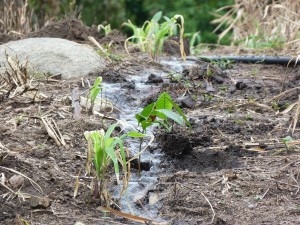 Envol Vert’s president came out to see how the plants were doing and think about the next stages for the project. The trees planted in September have experienced strong growth – around 10 cm per month, reaching 50 cm. Although mortality is very low on the farms, some diseases have been recorded: a species of worm eats the absorbent fibres of the tree roots while rabbits love the plant tops. This has not prevented growth of the Noya Maya but it has slowed it down. Finally, ants also eat the tree leaves. Now maize sowing is almost done, it is time to plant some chilli between the rows to vary the crops grown.
In addition, 600 trees have been distributed to two farmers who wanted to plant them on their farms. The project leader in the field, Cayo from Fundacion Nativa, taught the farmers how to plant the Noya Maya and regularly goes out to make sure the trees are growing well.
September 2012
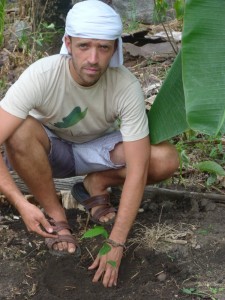 Planting the first trees
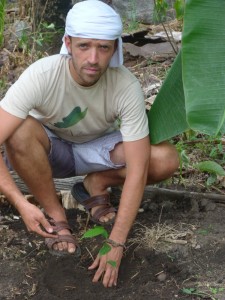
With the arrival of Boris Patentreger at Rio Ancho, the first 285 trees have been planted over the last few days! Two experimental sites were selected for planting.
The first site is a bare area, with no trees, comparable to grazing land for cattle ranching, and the trees have been planted in rows with other crops. The goal is to achieve diversified production over the first three years, before the Noya Maya starts producing, and also to provide the shade the Noya Maya requires for growth.
 The crops planted at the first plantation site are: -1 Noya Maya stand -1 corn kernel -1 manioc cutting – 1 plantain banana plant – 1 corn kernel -1 manioc cutting -1 corn kernel -1 Noya Maya plant, etc. The Noya Maya is a species that grows in the shade, so we began by sowing the corn, then planting the manioc and banana.
The Noya Maya was then also planted at the second plantation zone, where there were already reasonably big plantains growing. This second Noya Maya test site will help us see whether the Noya Maya plant grows better here. In the region, forests are felled to make way for ranching but also for crops and banana plantations. Over these few days, thanks to Cayo from Fundacion Nativa, we were able to see that the Noya Maya grows everywhere! In fact, there are examples of individual trees aged over a hundred years old growing on bare rock!
Putting the cookery lessons to use
 One of the benefits of Noya Maya is its rich protein, fibre, calcium and potassium content. The nut therefore makes an ideal dietary supplement. After the training she received in July, the new facilitator Darismar has put her knowledge into practice. She now gives in-depth lessons to almost twenty people, including students from four Colombian universities.
After toasting, sorting then grinding the Noya Maya, its juice was used with blackberries in soup and empanadas, enjoyed at a group tasting session.
August 2012
5 qualified facilitators
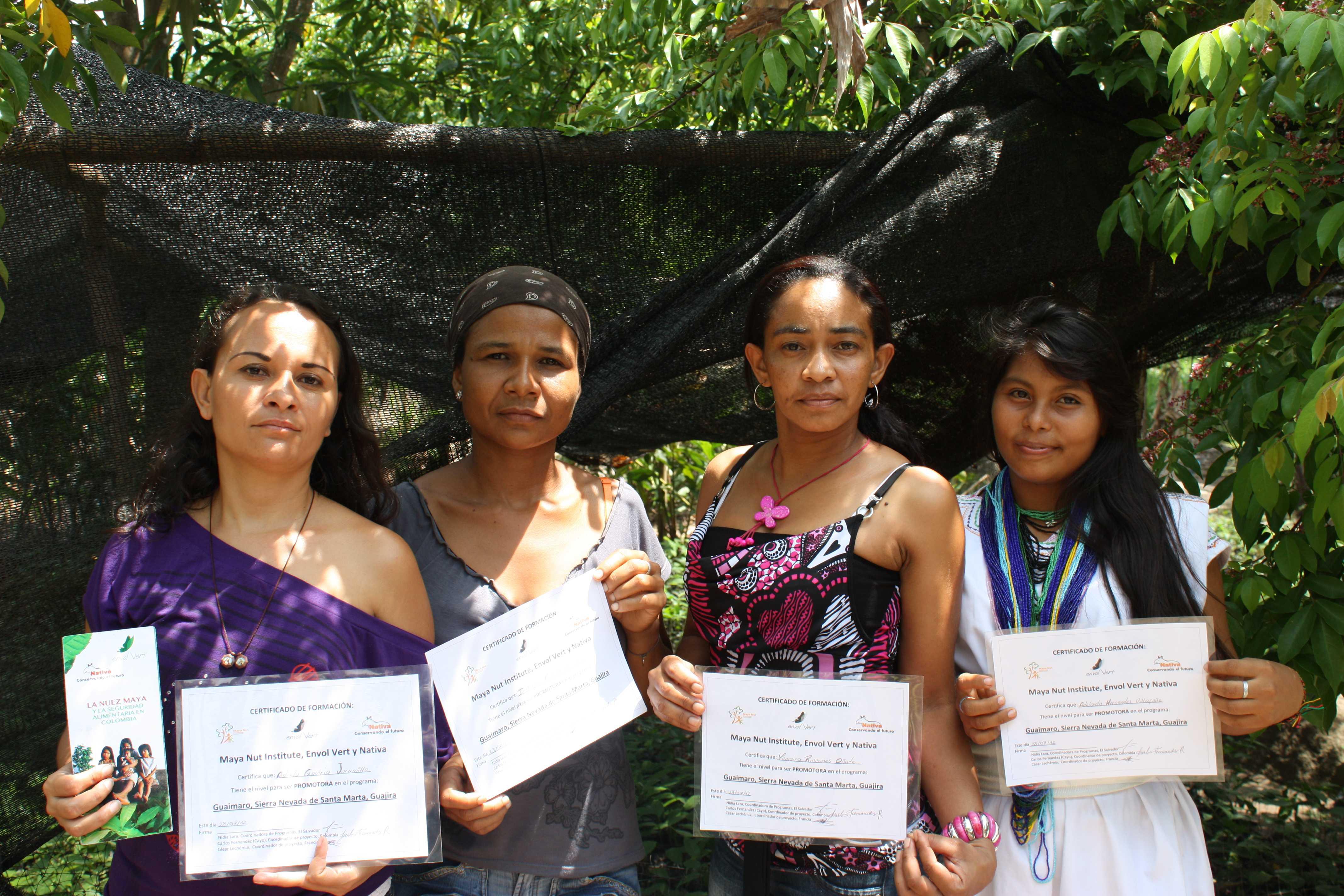 Five highly motivated women voluntarily came forward to work as promoters and have followed at least three workshops and more in-depth training. They now know how to train other people in planting, harvesting, drying and preparing food with Noya Maya.
Paisa, a housewife, has been very interested since the start of the project. “The nutritional aspect immediately appealed to me as well as the idea of being able to learn something new.”
 Adelayda, the youngest participant (19 years) is a native of Aruhaco. She appreciates the project’s strong links with nature and wants to be able to transmit ancestral know-how (the Noya Maya or “mewu” in Aruhaco has always been a regular part of the diet).
Darimar is a farmer with an 18-hecatre plot at Jerez and has been involved in the projects at the start, having planted the first tree at the Santa Barbara farm in 2011. As for Amalia, another farmer, she didn’t know anything about the Noya Maya but would now like to set up a nursery in her village. Yomaira is a trained hairdresser who likes teamwork and thinks that the project could generate new opportunities for her (micro-enterprise or job creation).
192 people trained
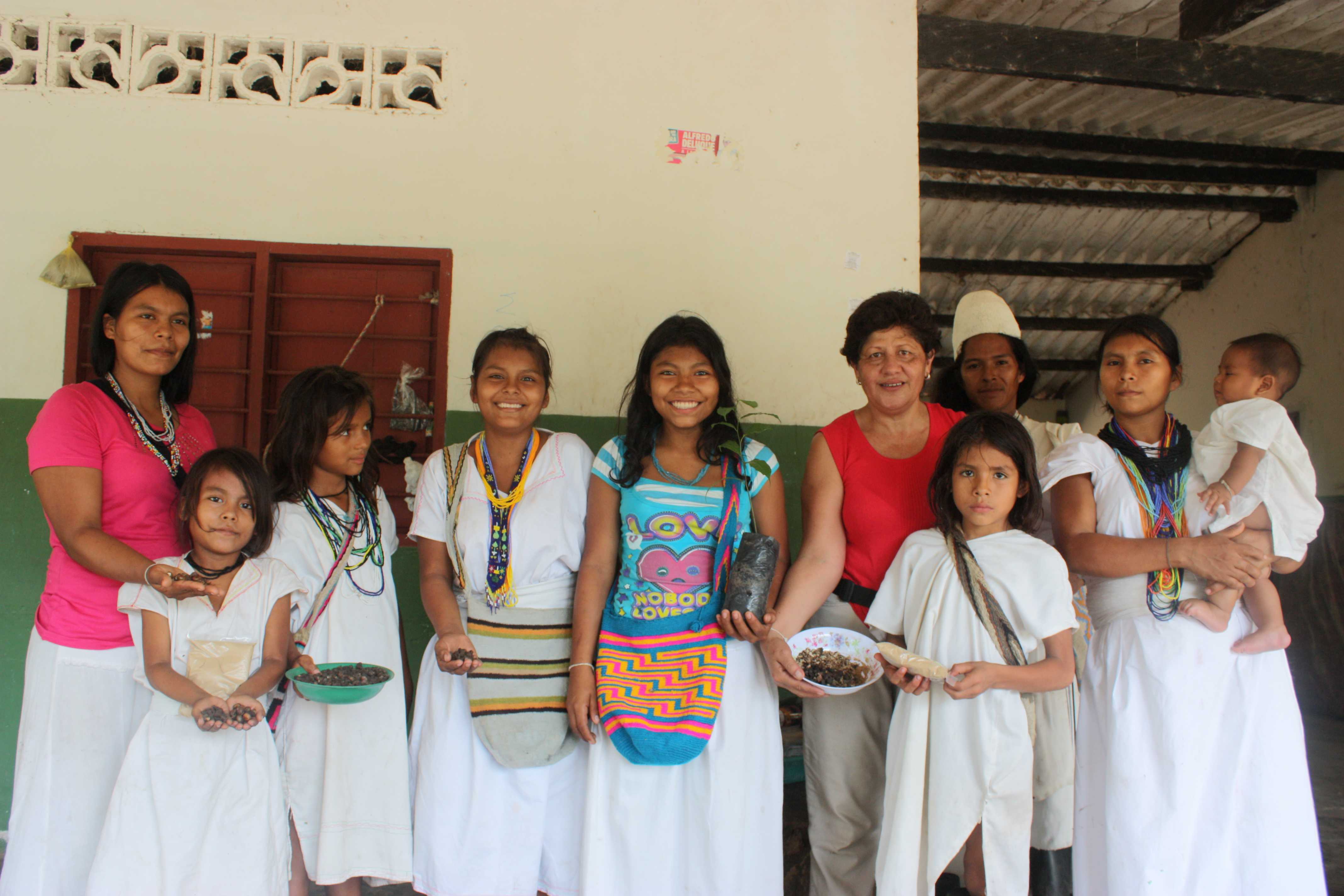 The five workshops given by Nidia, the agronomist from the Maya Nut Institute, enabled the training of a total of 192 people, all local farmers or natives of the region. 100 women have been trained. In addition, 30 children from Jerez took part.
In addition to these five workshops (see content below), a further two workshops were held. The first was for 15 women from among the most motivated, with the aim of setting up a group of female promoters. The workshop defined the function of this role and developed their knowledge further. The second was a more technical closing workshop, with training on how to build nurseries, details on planting techniques and the awarding of certificates to the facilitators
July 2012
 The media pick up on the story
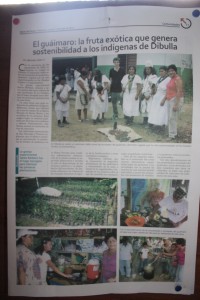
The project’s progress and dynamics have the drawn the attention of the media and local institutions, and we received a visit from the Coorpoguajira (regional environment institution) and the Diario del Norte newspaper which devoted a whole page to the project in its issue on Tuesday 17 July 2012. On that same day, Cayo, the local coordinator, was invited to the local radio station to talk about the progress made with the Tapir and Noya Maya projects.
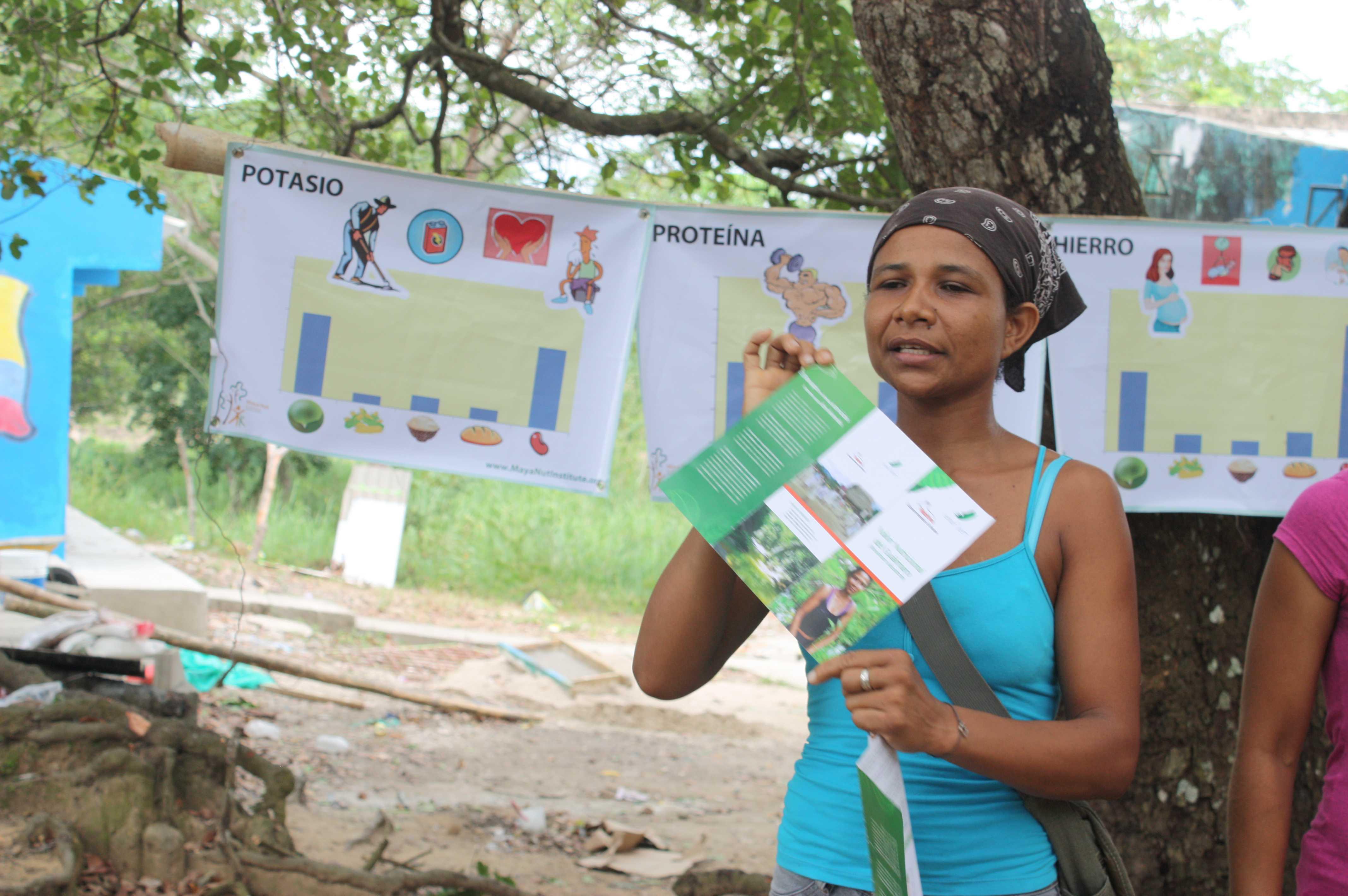
The cookery workshops have only just started, but are already a big hit!
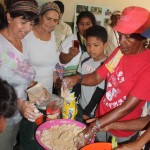 The arrival of Nidia, an agronomist and specialist in the Noya Maya, on 12 July was a turning point. This is an opportunity to improve acceptance of the project among the local population. Five workshops have been planned in the villages of Rio Ancho, Palomino, San Salvador, Jerez and one in the Cesar department. The workshops will comprise 3 phases:
– a presentation to recall the project goals (reforestation, food security and new sources of income), the nutritional value and the ancestral use of the tree;
– a practical phase: producing the Noya Maya flower and preparing different recipes (empanadas, arepa, fruit juice, etc.);
– a more technical phase to answer questions such as: How do you plant the tree? Which crops can you plant it with? When does the tree start producing nuts? What yield does it give? There is also an explanation on the nutritional value of the leaves for animal consumption (goats, cows, etc.) and the fact that they are actually better than traditional fodder.
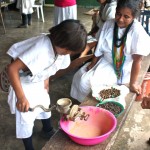 The first workshop took place on 14 July at Rio Ancho and was attended by inhabitants from the village and Kogi people, while the second was held the next day at Palomino, attended by local inhabitants and Arhuaco people from the Sabana Culebra community. More than 100 people came to learn during these two workshops and received a certificate at the end of the day. New recipes were tried out and resulted in the production of a recipe book, which will be added to as the project goes on.
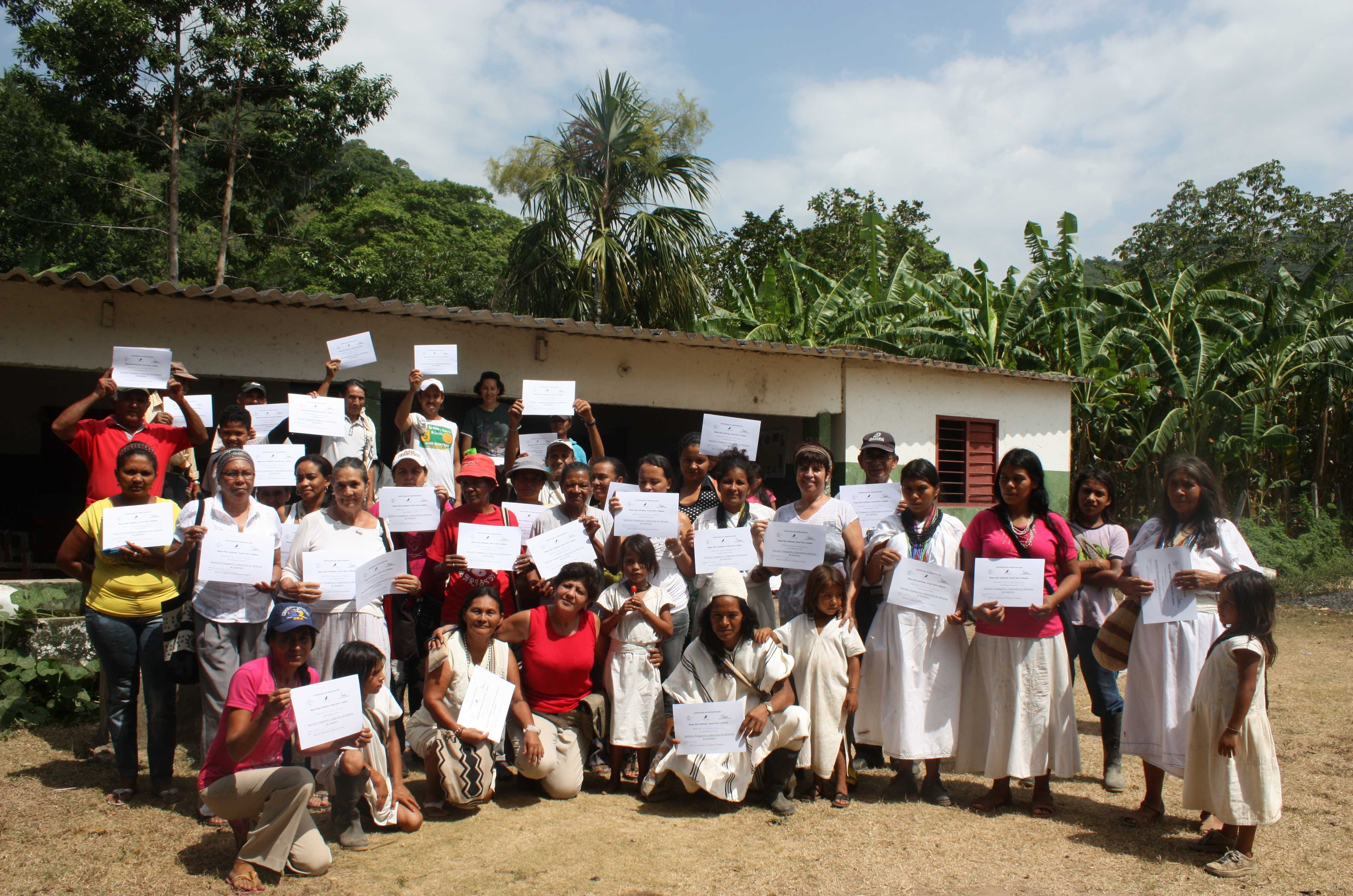 The enthusiasm felt about these first two workshop helped us identify our future promoters. Amalya (César), Adelayda (Aruhaco community), Nelly (Rio Ancho) and Yomaira (San Salvador). They will attend a special workshop for more in-depth training.
An awareness-raising day has also been scheduled with the school in Rio Ancho, where the project is based.
June 2012
11,000 plants in the tree nursery
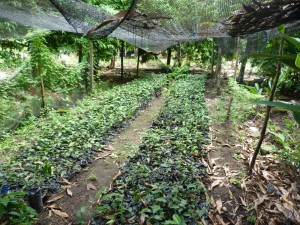 César, a project volunteer, is making his first contacts with various local stakeholders (farmers and institutions). Meanwhile, work is progressing at the tree nursery. Several trips out into the reserve has been organised to collect seeds that are starting to germinate. The seedlings are then planted at the Santa Barbara farm. There are now 11,000 Noya Maya plants in the nursery.
May 2012
A volunteer recruited
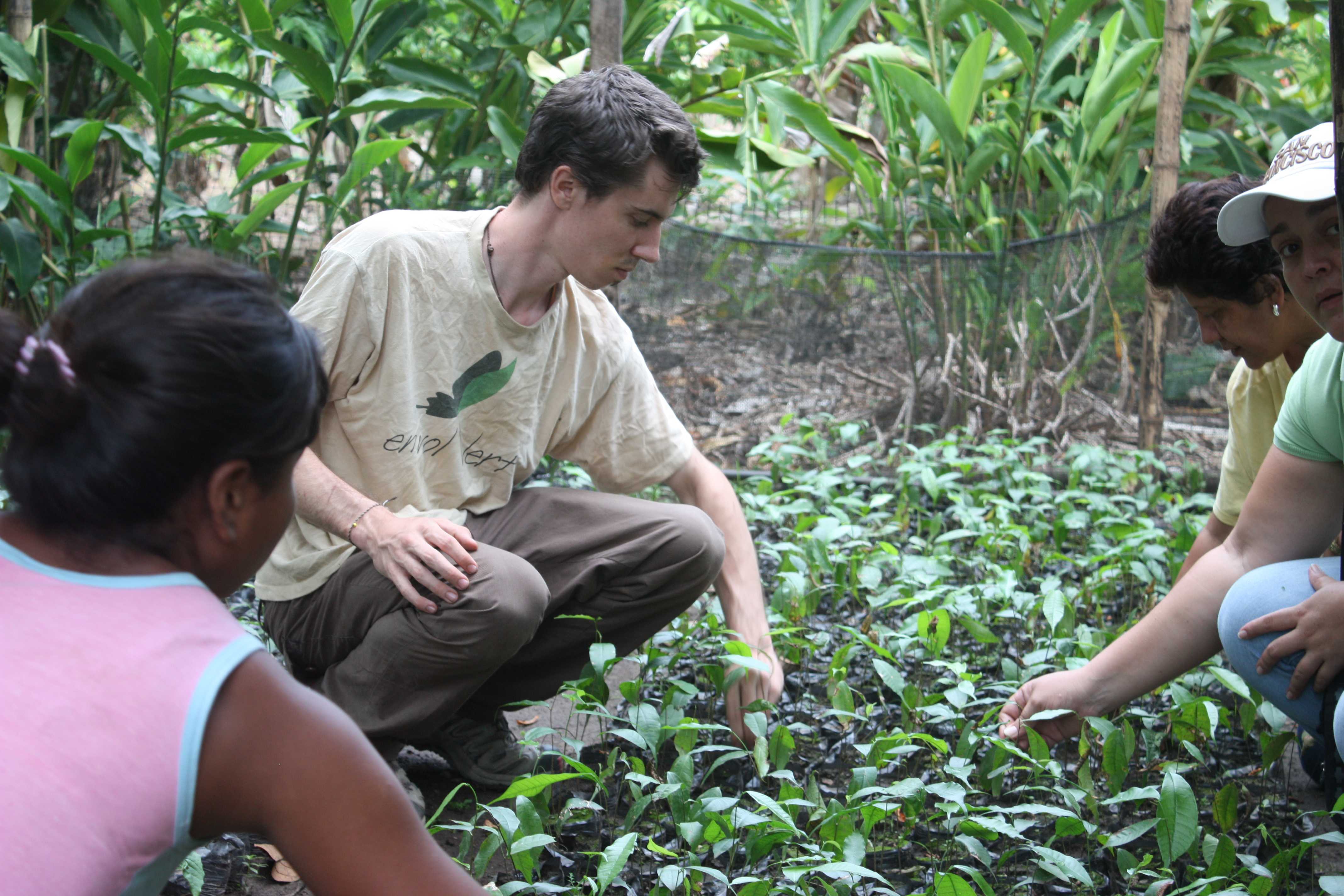 To support the work of Envol Vert and Fundacion Nativa, to track the indicators, stages in the project and to help with implementation in the field and administrative tasks, Envol Vert had been looking for a motivated, capable volunteer.
César Lechémia from France, a graduate in international relations and project management with the IRIS and Bioforce training institutes, was ideal for the job He will go out to the project in early June and below, he explains a bit more about his background and motivation for the project:
“It just seemed natural to me to apply for this position. As a student on a humanitarian master’s course and with some experience of project coordination, I was looking for a new experience in the field of development. What caught my attention was the all-round aspect of the project as it includes the environment, training and nutrition, a social aspect and an economic aspect in helping improve conditions for the local populations. I love everything to do with Latin America, having travelled to the continent a number of times and been involved in small-scale humanitarian projects. I was even more drawn to the project as it is based in Columbia, the country that was the focus of my thesis. Finally, the Association and its philosophy and values immediately inspired me and made me want to sign up, so I was won over and ready to go out and help them in the field.”
Definition of the MNI’s work
One phase of the project, crucial to getting local inhabitants to accept it, is the information sessions, held just after the seed harvest, explaining the nutritional value of the Noya Maya and the different ways that it can be cooked.
This phase is also the opportunity to raise awareness of the possibilities for selling their nuts and the processed product to improve family revenues and well-being.
The Maya Nut Institute, an organisation that has been working in this area for several years and that helped us draft and define the project, was logically selected to work on this with us. Nidia, a native from Salvador, will come and train local women. Her exact role and working time on site is currently being defined.
April 2012
The women get down to work
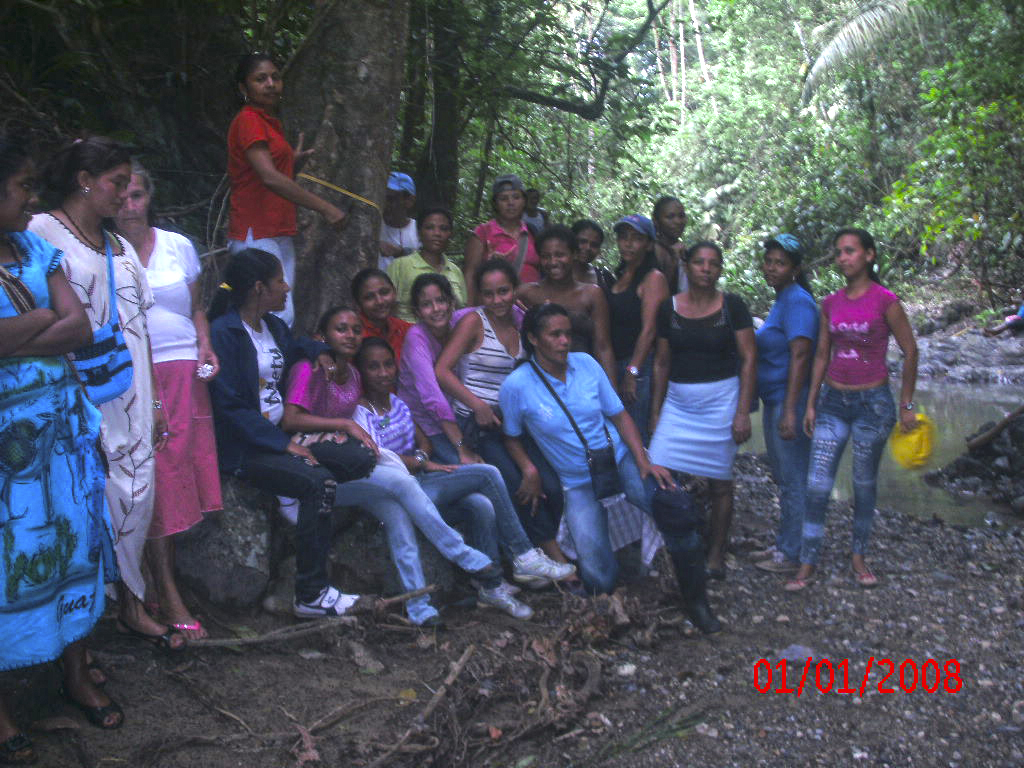 On request from Envol Vert, Cayo, the project leader, has started to bring a group of women together around the Noya Maya Project and to train them. The trees’ fruit season lasts from April to May and it is important to be ready to harvest the seeds that fall to the ground in May and June, or we will lose a year.
The project’s minimum goal is to collect around 150 kg of nuts and dry them so that they can be stored and used in cookery workshops with the women. Once the first group of women was put together, Cayo organised the first “field visit” to show the women the Noya Maya trees located closest to their homes.
A tree nursery set up
Thanks to the initial funds received, Fundacion Nativa has now set up a tree nursery with some 10,000 bags ready to be planted with Noya Maya seedlings, and 4,000 seeds have already been sown. We are waiting for the next seed harvest so that we can carry on with the work. Once these first seedlings have grown, we can start planting them out.
Ecocert wants to plant trees
As part of an in-house operation run during Sustainable Development Week, employees at Ecocert France enabled the planting of an additional 79 Noya Maya trees at the Santa Barbara farm and along the rivers. Fundacion Nativa will do the actual planting work.
A first financial partner
 Humus, Fund for Biodiversity has granted Envol Vert its first donation, marking the official kick-off of the project.
Founded in 2011 by the Dumont family, who had been promoting and developing organic farming, green building and alternative medicine for 30 years, Humus is a private foundation that aims to protect biodiversity.
Humus focuses its activity in five areas: rivers and waterways, primary forests, preserving species, organic farming and local development, sustainable lifestyles and new environmental indicators. Humus has chosen to work at the root of environmental issues, as a booster for projects working closely with environmental and social organisations that drive change. To fulfil this role, Humus provides its expertise and raises funds to support NGOs with little visibility due to their modest size, but who are doing remarkable work in the field with a real impact against intensive methods that destroy value.
January 2012
Defining the project
Envol Vert and Fundacion Nativa are getting down to work together. Based on the pre-project drafted a few months earlier, the goal this time is to finalise things by defining the expected outcomes, quantifying indicators, identifying the beneficiary populations, preparing a detailed list of actions to be implemented, the timeframe, budget and selecting partners. The project has now been written so the fund-raising can begin.
The first plants
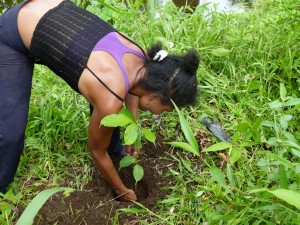 Boosted by the results of Alexandra Rigot’s study, Fundacion Nativa has decided to make a start on the project. It now has a small tree nursery of around 200 plants, including Noya Maya and other trees. Cayo, the field coordinator, has decided to start planting trees at the Santa Barbara farm in Rio Ancho.
He has planted 100 trees to get the project off the ground and keep up the momentum around the Noya Maya project among the local population. His long-term goal is for the Santa Barbara farm to become an experimental pilot site for Noya Maya in “domestic” conditions and for agro-forestry more generally.
November 2011
An environmental diagnosis: rare trees
![[NOYER]Travail de terrain georef01©A.Rigo](http://envol-vert.org/wp-content/uploads/2013/03/NOYERTravail-de-terrain-georef01©A.Rigo_.jpg) Work has begun to identify Noya Maya trees, so as to find out where to harvest seeds during the fruit season. Use of the e-pocket, provided by our partner Natural Solutions, held us to locate species via GPS points and to take photos. Around ten or so trees were identified and geotagged around the villages of Palomino and Rio Ancho (at between 5 minutes and an hour and a half’s walk from the villages).
Work has begun to identify Noya Maya trees, so as to find out where to harvest seeds during the fruit season. Use of the e-pocket, provided by our partner Natural Solutions, held us to locate species via GPS points and to take photos. Around ten or so trees were identified and geotagged around the villages of Palomino and Rio Ancho (at between 5 minutes and an hour and a half’s walk from the villages).
However, as Lucho de Palomino reminds us, we shouldn’t forget the scale of damage caused by deforestation. “When I was a kid, there were plenty of Noya Maya trees around the villages – so many that we used the seeds as munition when we were playing!” Nonetheless, the tree is very hardy and can be found on all kinds of ground and slope – along river banks (with its roots virtually in the water) and inland. It seems to grow anywhere – in fertile soil, between soil and rock, on clay, in sandy soil and so on. It can be found at various altitudes between 100 m and 600 m above sea level. It can also survive severe weather and natural phenomena. For proof, one tree was identified alive and producing fruit five years after suffering a fire.
Social diagnosis: ancestral use
![[NOYER]Reunions avec population8©A.Rigo](http://envol-vert.org/wp-content/uploads/2013/03/NOYERReunions-avec-population8©A.Rigo_.jpg) Alexandra Rigo’s field visit in November 2011 led to discussion about the Noya Maya aspect of the project, involving men and women from the area of Palomino and Rio Ancho. There is high interest among the population for the planting of Noya Maya and the use of its nuts for food. The goal of Alexandra’s study was to check that the Noya Maya did actually enjoy ancestral use among the local population, or at least the seniors. It turns out that 50% of the population surveyed seems to be familiar with the tree.
Alexandra Rigo’s field visit in November 2011 led to discussion about the Noya Maya aspect of the project, involving men and women from the area of Palomino and Rio Ancho. There is high interest among the population for the planting of Noya Maya and the use of its nuts for food. The goal of Alexandra’s study was to check that the Noya Maya did actually enjoy ancestral use among the local population, or at least the seniors. It turns out that 50% of the population surveyed seems to be familiar with the tree.
A few witness accounts testified to this, for example Juan de Dios from Palomino remembers: “When I was a kid, there was an invasion of shrimps and almost all the crops in the fields died off so there was nothing to eat at home. We still had to feed ourselves and it was the Noya Maya that saved us. My grandmother used it for every meal, preparing it in different ways and I remember how nourishing it was.”
It also became apparent that the Noya Maya nut can be prepared in a variety of ways. It is often compared to a bean and is mainly eaten with bread, in soups or patties. The nut can be simply boiled or grilled, or ground to make flour, cooked with milk, mashed, and eaten in sweet or savoury recipes.
Share This Story, Choose Your Platform!

What is your impact on forests?
What is your impact on forests?