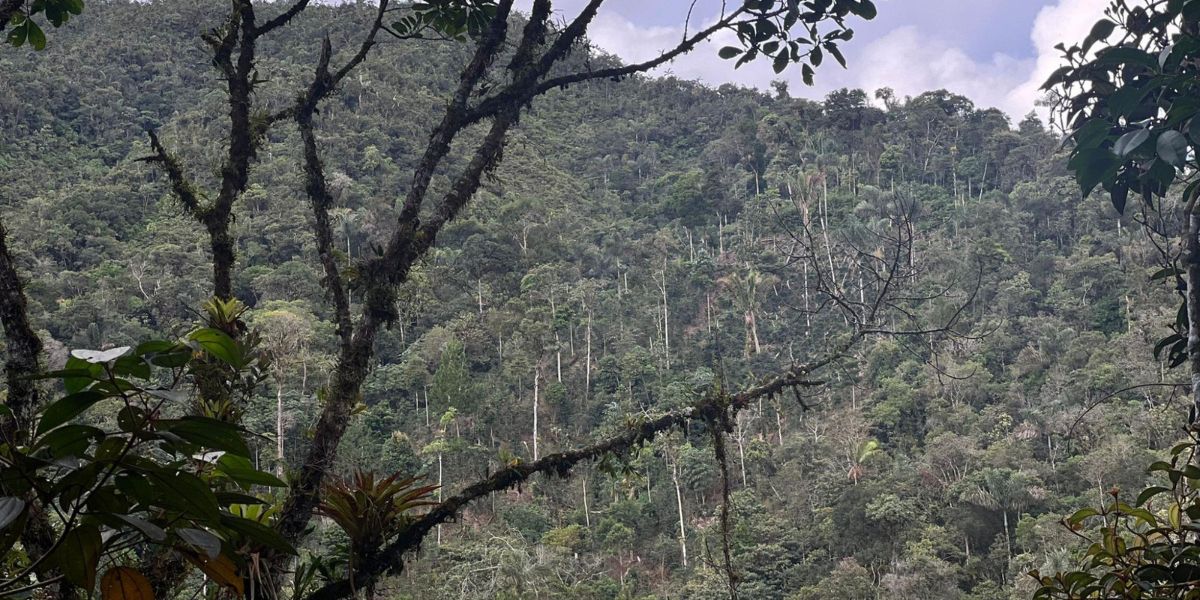
As part of the Tropical Dry Forest programme, led by the Envol Vert Foundation, restoration and sustainable production strategies have been implemented through the establishment of agroforestry systems (AFS) and silvopastoral systems (SPS) on rural properties in the municipalities of Becerril (Cesar), Toluviejo, and Ovejas (Sucre). These initiatives aim to integrate productive activities with the restoration of the tropical dry forest and the strengthening of sustainable agricultural practices.
To assess the changes resulting from these interventions, a multi-temporal analysis of vegetation cover was conducted in March by comparing satellite images from 2019 and 2025 using the Google Earth Pro platform with the polygons of each property.
The exercise was based on the visual interpretation of the images, evaluating aspects such as the continuity of vegetation cover, the apparent density of the tree component, changes in texture and tone, as well as the internal organization of crops, pastures, and trees. For some properties, a percentage estimate of forest cover was also performed by manually delineating areas with woody vegetation, which allowed for a comparison of the extent of this cover between the two evaluated periods.
A total of 28 properties out of the 231 active properties in the three projects were analyzed, of which seven are in Becerril, eight in Ovejas, and thirteen in Toluviejo, representing approximately 12.12% of the total number of properties. The results show an average increase in tree cover of 26.87%, with estimated increases of 19.37% in Becerril, 35.46% in Ovejas, and 23.60% in Toluviejo.
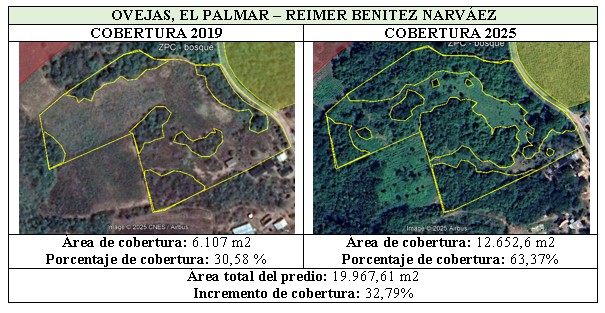
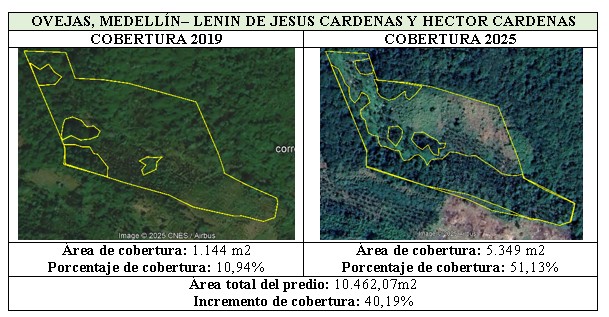
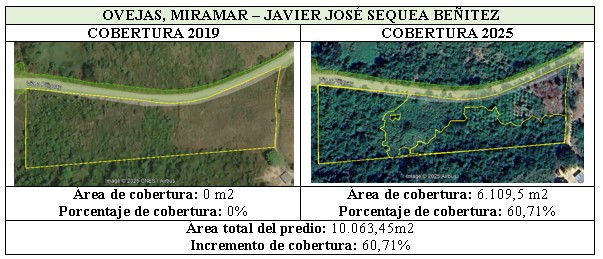
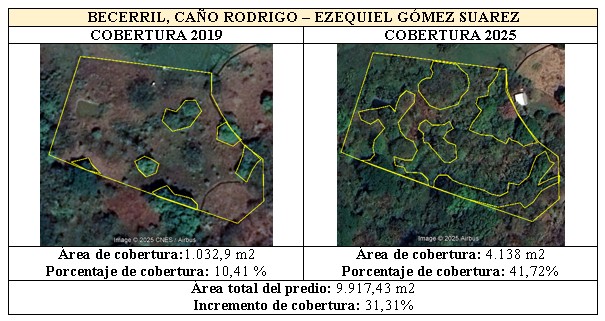
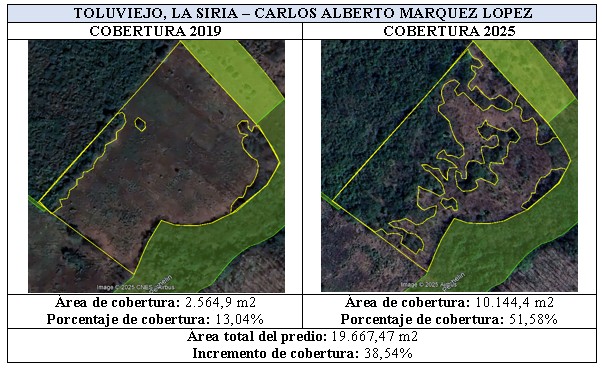
Overall, the compared images show a trend toward the consolidation and densification of vegetation cover, evidenced by a reduction in clearings, a greater presence of trees, and a more continuous vegetation structure within the plots. These changes reflect progressive processes of vegetation enrichment associated with the implementation of production systems.
Taken together, the results suggest that SAFs and SSPs have contributed positively to increased tree cover and the transition toward more diverse and functional agroecosystems, promoting the recovery of the tropical dry forest and the strengthening of more sustainable production practices in the region.
Share This Story, Choose Your Platform!

What is your impact on forests?
What is your impact on forests?