Biodiversity ambassadors : an innovative new role to support community self-reliance
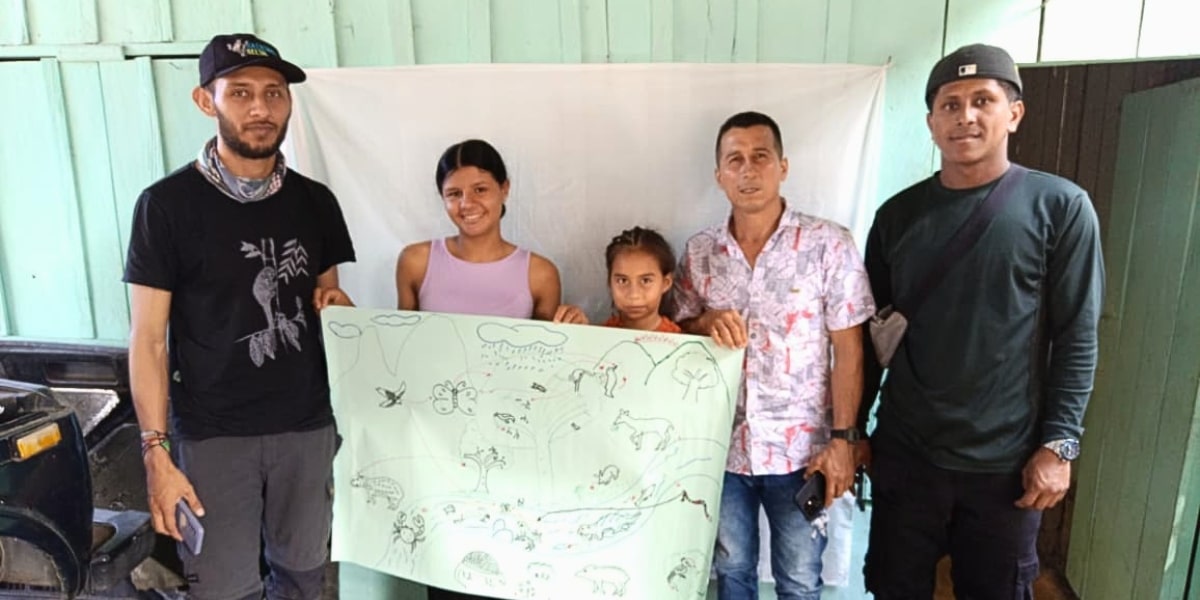
In Piamonte, Cauca, the ConBosque project continues to carry out activities in the region. In this area, where the forest, traditional knowledge, and biodiversity are closely intertwined, four community members were selected to serve as “biodiversity ambassadors” for a three-year term. This role is not limited to simply observing nature; it also provides an opportunity to gain new knowledge about how biodiversity works and how to conserve it in the region.
Training Local Leaders
Identifying and training environmental ambassadors represents an innovative approach to community empowerment for forest conservation. Unlike other existing training and awareness-raising methodologies, the ambassadors will receive a combination of technical training and soft skills training to raise community awareness.
This will enable the ambassadors to become key actors and empower other community members, creating a ripple effect through peer-to-peer outreach. The goal is to promote sustainable practices and forest conservation while taking into account the region’s cultural elements. The creation of this role also aims to have these community representatives serve as a link to local governance bodies, giving a voice to the local population and fostering long-term structural change. This promotes greater involvement in the territories’ own development and strengthens their capacity to influence decisions made at the political level.
This project also sought to promote gender equality, with a 50% quota of women and 50% of men among its members, as well as intergenerational cooperation, with participants of all ages. For example, this group includes members aged 10, 18, 23, and 50.
An Initial Training Session Full of Lessons Learned
As part of this initiative, the four ambassadors participated in various activities. The first part focused on strengthening local biodiversity and research questions, taking the form of theoretical and practical sessions on biodiversity in the municipality. The second part focused on learning and managing geographic information systems (GIS), a technique that creates, manages, analyzes, and maps data, integrating location to better understand the territory. However, the ambassadors’ training was not only practical but also theoretical, including the development of soft skills. These sessions fostered the development of competencies such as leadership, creativity, and teamwork skills necessary for effectively interacting with others and collaboratively solving problems. Additional activities and training courses will be held throughout the program’s three-year duration.. These sessions fostered the development of competencies such as leadership, creativity, and teamwork skills necessary for effectively interacting with others and collaboratively solving problems. Additional activities and training courses will be held throughout the program’s three-year duration.
Next Steps
Over the course of the three years, the training aims to create 12 community biodiversity inventories, consolidate a database of the Caquetá titi monkey (Plecturocebus caquetensis ) records, and compile a list of species with environmental, economic, and cultural value. The ambassadors will also participate in the general bird census for the upcoming Global Big Day in 2027.
Share This Story, Choose Your Platform!

What is your impact on forests?
What is your impact on forests?